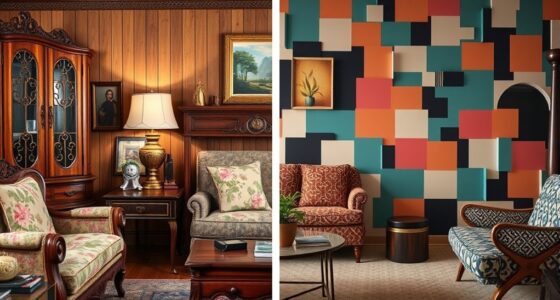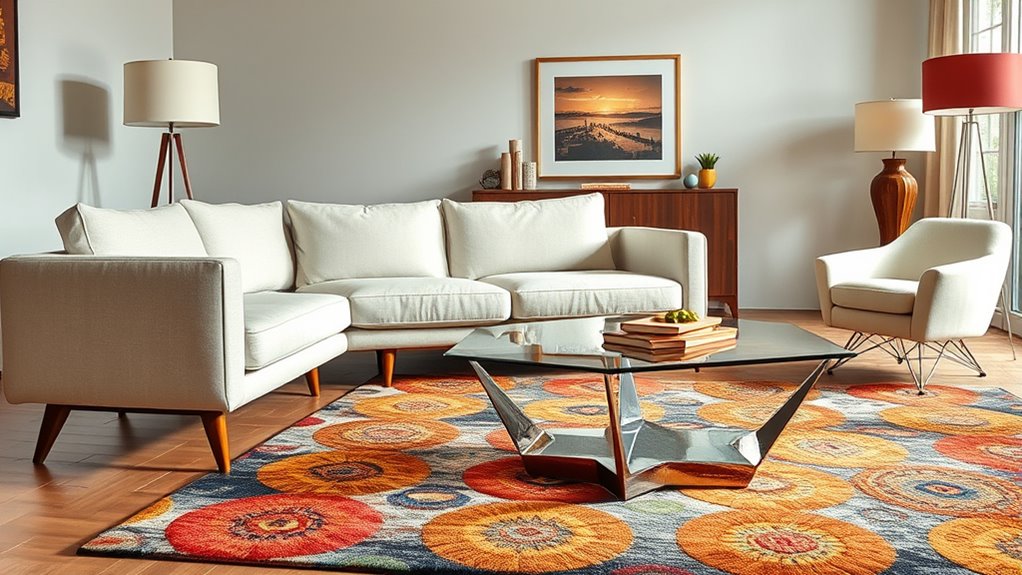

To identify mid-century, art deco, and retro furniture, focus on key style clues. Mid-century pieces often feature sleek lines, organic shapes, and natural, earthy colors with smooth wood finishes. Art deco furniture stands out with bold geometric patterns, glossy surfaces, and jewel tones like emerald and sapphire. Retro designs are lively with vibrant colors, curved forms, and varied textures like vinyl or molded fiberglass. Spotting these features will help you distinguish each style; explore further to master the details.
Key Takeaways
- Mid-century furniture features sleek, simple lines with natural wood finishes, emphasizing function and organic shapes.
- Art deco pieces display bold geometric patterns, glossy surfaces, and luxurious materials like marble and lacquer.
- Retro furniture is characterized by playful curves, vibrant colors, and varied textures such as vinyl and molded plastics.
- Mid-century designs favor subdued, earthy tones, while art deco and retro styles use vivid jewel and lively colors respectively.
- The overall aesthetic distinguishes mid-century as understated and timeless, whereas art deco exudes glamour and retro emphasizes fun and nostalgia.
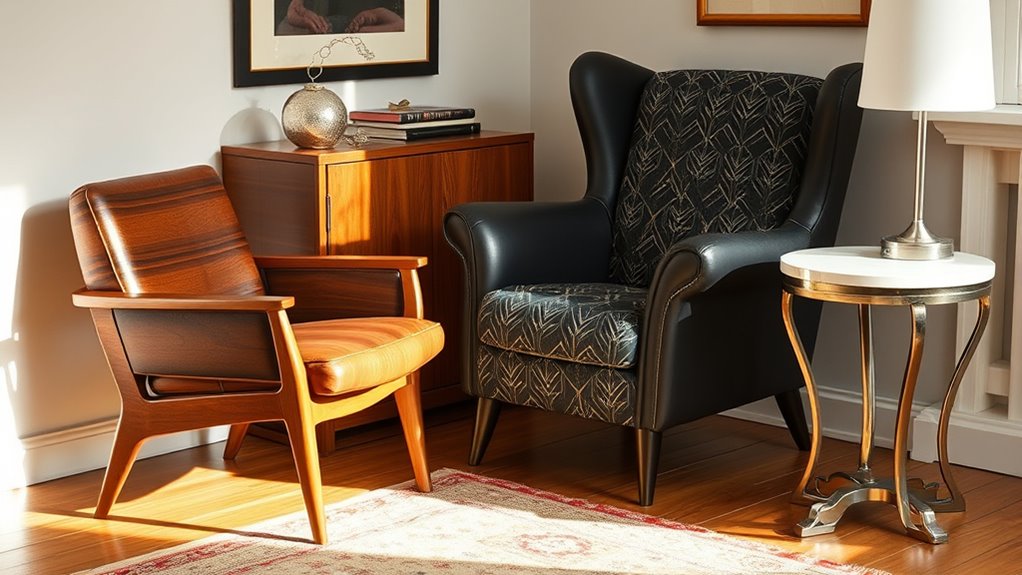
Furniture serves as a powerful indicator of a room’s style, revealing the design era, craftsmanship, and aesthetic preferences behind it. When trying to distinguish between mid-century, art deco, and retro furniture, paying attention to color palettes and material textures can provide essential clues. Each style reflects specific choices that tell a story about the period’s cultural influences and design principles.
In mid-century furniture, expect to find a natural, earthy color palette. Warm browns, olive greens, and muted yellows dominate, creating a calm, understated vibe. These hues are often complemented by sleek, simple lines, emphasizing function over ornamentation. Material textures tend to be smooth and polished, with an emphasis on natural materials like wood—especially walnut, teak, or rosewood—sometimes paired with metallic accents. The surfaces are often finished to highlight the wood grain, giving a warm, inviting feel. You’ll notice the use of laminates and molded plastics as well, but the overall aesthetic stays grounded in organic textures that evoke a sense of harmony with nature. Additionally, the use of high-quality craftsmanship in mid-century furniture emphasizes durability and timeless appeal.
Art deco furniture, on the other hand, exudes glamour and luxury through its bold color choices and rich textures. Think jewel tones like emerald green, sapphire blue, and deep golds. These vibrant hues often appear in upholstery, lacquered finishes, or painted surfaces. Material textures in art deco pieces are characterized by high shine and opulence—marble tops, glossy lacquered surfaces, mirrored accents, and metallic details such as chrome or brass are common. The textures often appear smooth, reflective, and polished, creating a sense of sophistication and extravagance. The combination of bold colors and luxurious textures not only captures the opulence of the 1920s and 1930s but also makes a statement piece in any room.
Retro furniture, particularly from the 1950s and 60s, embraces fun, lively colors and playful textures. Bright oranges, teals, pinks, and avocado green are typical, often arranged in vibrant, contrasting combinations. Material textures tend to be more varied—think of vinyl upholstery, molded fiberglass, and laminates with a glossy or matte finish. Retro furniture often features smooth, curved surfaces and whimsical shapes, emphasizing comfort and personality. The textures are often sleek and shiny, designed to catch the eye and evoke a sense of nostalgia. This era’s furniture invites you to experience a sense of optimism and experimentation, with bold color choices and tactile surfaces that encourage touch and interaction.
Top picks for "identify century deco"
Open Amazon search results for this keyword.
As an affiliate, we earn on qualifying purchases.
Frequently Asked Questions
How Can I Tell if Furniture Is Authentic or a Reproduction?
To tell if furniture is authentic or a reproduction, examine the construction methods—authentic pieces often feature solid wood joinery, dovetail drawers, and hand-crafted details. Look for signature design motifs specific to the era, like geometric patterns or sleek lines. Reproductions may use cheaper materials, machine-made details, or lack the craftsmanship seen in original pieces. Familiarity with these clues helps you confidently identify genuine vintage furniture.
Are There Specific Materials Unique to Each Style?
Think of furniture styles as recipes—each with unique ingredients. Mid-century pieces often feature materials like teak, walnut, and molded plywood, showcasing clean lines and sleek finishes. Art Deco leans on luxurious materials like chrome, glass, and lacquered surfaces, crafted with precise manufacturing techniques. Retro furniture might use vibrant plastics or faux finishes, reflecting the playful spirit. Recognizing these materials helps you spot authenticity and appreciate each style’s distinct character.
How Do Color Palettes Differentiate These Design Periods?
You’ll notice that each style has distinct color schemes and mood tones. Mid-century furniture often features muted, earthy hues like olive green, mustard, and teak, creating a warm, natural feel. Art Deco stands out with bold, luxurious palettes such as gold, black, and jewel tones, evoking glamour and sophistication. Retro styles lean toward bright, playful colors like neon pinks and teals, giving off energetic, fun vibes.
What Are Common Hardware Features in Mid-Century Furniture?
You’ll notice that mid-century furniture often features unique drawer handles, typically sleek, minimalist, or geometric, emphasizing simplicity. The leg attachment techniques are also distinctive, with tapered or splayed legs securely fitted to the furniture’s frame, creating a clean, streamlined look. These hardware features reflect the era’s focus on functionality and modern aesthetics, making mid-century pieces easily recognizable by their subtle yet stylish hardware details.
Can Furniture Style Help Determine a Piece’s Age?
You might think furniture style helps determine a piece’s age, but it’s not always dependable. While craftsmanship and stylistic symbolism often reflect a specific era, designers sometimes revive or blend styles, blurring the lines. Investigating these details can offer clues, but don’t rely solely on style—examine construction techniques and materials to accurately date furniture. Styles evolve and overlap, so a nuanced approach ensures better accuracy.
Conclusion
Now that you’ve uncovered the style clues, you’re like a detective piecing together a beautiful puzzle. Recognizing the sleek lines of Mid-Century, the bold geometric shapes of Art Deco, or the playful nostalgia of Retro, you can confidently identify each era. Think of these styles as different musical notes—each with its own rhythm and mood. With this knowledge, you’re now ready to bring these timeless melodies into your own space, creating a symphony of style.