Turning cheap vintage finds into treasures is all about creative upcycling and strategic pricing. Visit flea markets with an eye for overlooked items like wooden chairs, mirrors, and lamps, then transform them using paint, fabric, or sanding to boost their appeal. Research market prices and add your craftsmanship value to set fair, profitable prices. Experiment with bundle deals and adaptable pricing to clear inventory and maximize profit. Keep refining your skills, and you’ll discover more ways to turn flea market flips into a lucrative hobby.
Key Takeaways
- Use upcycling techniques like painting, fabric, and creative modifications to transform inexpensive vintage finds into desirable items.
- Research market value and emphasize unique features or craftsmanship to justify higher resale prices.
- Incorporate costs, effort, and profit margins into pricing strategies to ensure profitability.
- Develop skills in spotting promising items and creatively enhancing their appeal for increased marketability.
- Offer bundle deals or discounts to attract buyers and move inventory quickly, maximizing profits from flea market flips.
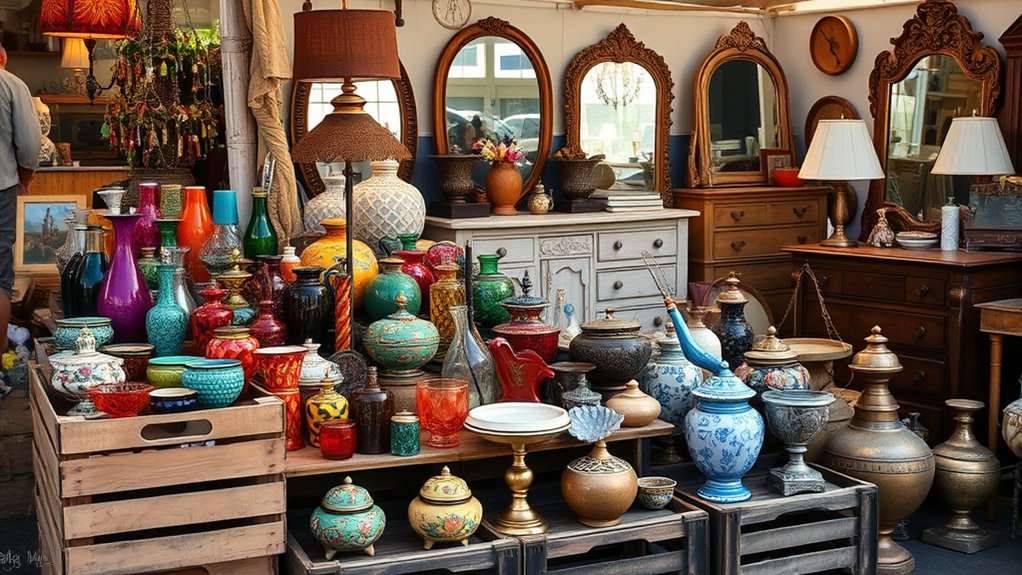
Flea market flips have become a popular way to turn hidden treasures into profit. You stroll through bustling aisles, spotting items that others overlook—an old wooden chair, a vintage lamp, or a distressed picture frame. The key to transforming these finds into desirable products lies in mastering upcycling techniques. Instead of simply cleaning or minor repairs, you breathe new life into each piece, using paint, fabric, or creative alterations to add value and uniqueness. For example, sanding and repainting a vintage stool with bold colors or transforming an outdated mirror into a chic wall art piece can considerably increase its appeal. These techniques don’t just improve the item’s appearance; they make it more desirable and worth a higher price. Developing your skills in upcycling techniques can also open up new creative possibilities and elevate your finished products. Once you’ve revamped your finds with upcycling, it’s essential to develop effective pricing strategies. You need to strike a balance between setting a fair price that reflects the effort and creativity you’ve invested and ensuring you make a profit. Start by researching similar items online or at local markets to understand what buyers are willing to pay. Consider factors like the quality, the uniqueness of your upcycled piece, and the time you spent on the project when setting your price. Sometimes, adding a story or emphasizing the craftsmanship behind your flip can justify a higher price point. It’s also wise to be flexible; if an item doesn’t sell at your initial asking price, consider lowering it slightly rather than letting it sit unsold. Your ability to price items strategically makes a difference between a quick sale and a stagnant inventory. Incorporate your costs—materials, time, and effort—into your pricing, but don’t forget to add a profit margin that rewards your work. Offering bundle deals or discounts for repeat buyers can also boost sales while maintaining profitability. Remember, your goal is to find a sweet spot where your upcycled pieces are attractive to buyers and profitable for you. As you refine your upcycling techniques and develop smart pricing strategies, you’ll become more confident in turning cheap vintage finds into desirable treasures that fly off the shelves. With practice, you’ll learn to spot the most promising items, transform them creatively, and price them effectively, making flea market flipping a rewarding and lucrative hobby.
Top picks for "flea market flip"
Open Amazon search results for this keyword.
As an affiliate, we earn on qualifying purchases.
Frequently Asked Questions
What Skills Are Essential for Successful Flea Market Flipping?
To succeed in flea market flipping, you need sharp restoration techniques to enhance items’ appeal and knowledge of pricing strategies to maximize profit. You should be able to spot valuable pieces, clean or repair them, and set competitive prices. Your ability to negotiate with sellers and customers also helps. Staying creative with your restoration and understanding market trends allows you to turn cheap vintage finds into coveted treasures.
How Do I Identify Valuable Vintage Items?
You know what they say, “Knowledge is power.” To spot valuable vintage items, look for authentic signs of age, like unique craftsmanship or wear. Focus on antique jewelry with well-made clasps and vintage clothing with original tags or fabrics. Trust your instincts and research trends to identify hidden gems. With practice, you’ll quickly recognize items worth flipping, turning everyday finds into profitable treasures.
What Are the Best Places to Find Hidden Treasures?
You can find hidden treasures by exploring thrift store shopping and estate sale hunting regularly. Visit local thrift shops, especially those that support charities, and look for unique, well-made items. Estate sales are great for rare vintage finds; arrive early for the best picks. Keep a list of your favorite spots, stay patient, and be ready to spot valuable pieces amid the clutter. Consistent searching increases your chances of uncovering amazing treasures.
How Can I Estimate the Resale Value Accurately?
Did you know that 85% of successful resellers use comparable market trends to set prices? To estimate resale value accurately, you should research similar items online and observe current market trends. Use pricing strategies like pricing slightly below market value to attract buyers or premium pricing for unique finds. Regularly monitor trends to adjust your prices, ensuring you maximize profit while staying competitive in the vintage resale market.
What Safety Precautions Should I Take While Flipping Items?
You should always wear safety gear like gloves and masks when handling vintage items to protect yourself from dust, mold, or sharp objects. Keep your belongings secure by using theft prevention measures such as locks, secure bags, or hidden compartments. Stay alert and aware of your surroundings to avoid theft or accidents. Taking these precautions guarantees a safer flipping experience, helping you enjoy your hobby without unnecessary risks.
Conclusion
So, next time you stroll through a flea market, remember there’s hidden potential in those overlooked pieces. With a bit of creativity and patience, you can transform what seems like ordinary into something truly special. Sometimes, what appears to be a fleeting opportunity might just be your secret to uncovering a hidden treasure. Trust your instincts, embrace the challenge, and enjoy the journey of turning vintage finds into personal masterpieces. Your next great flip could be just around the corner.