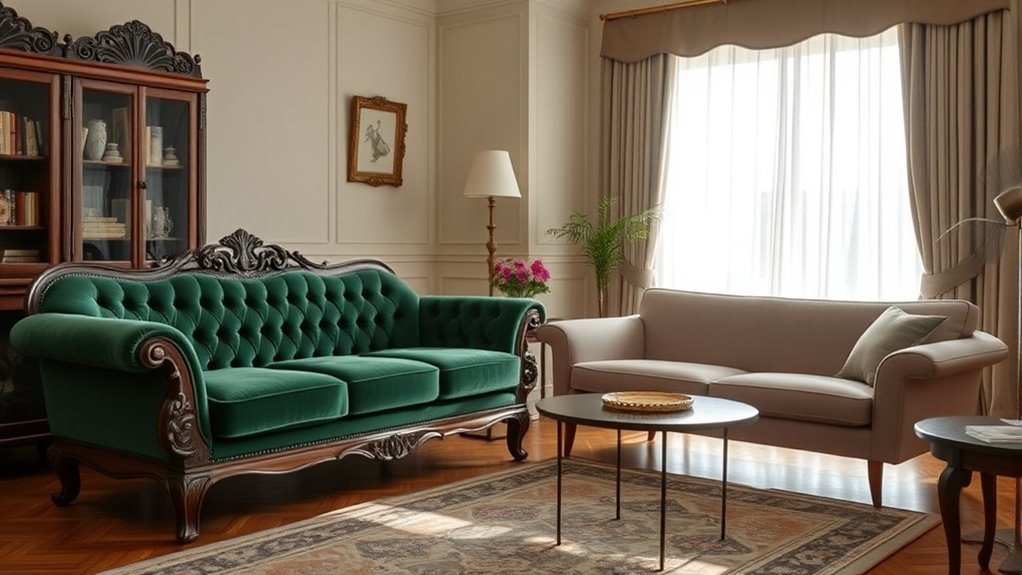

When choosing a vintage couch, focus on balancing comfort and style by considering its design and ergonomics. Vintage mid-century pieces often have sleek lines that look great but may need reinforcement for daily use. Test cushions for support, and look for supportive frames that can be reupholstered if needed. Pairing these sofas well with your decor creates a cozy, stylish space. Keep exploring to discover how to combine both qualities effortlessly.
Key Takeaways
- Prioritize comfort by testing the couch’s support, cushions, and ergonomics, ensuring it suits daily use.
- Match the vintage style with your existing decor to create a cohesive aesthetic that enhances the space.
- Consider the size and layout to balance open space with functional seating for entertaining and daily needs.
- Reupholstering or reinforcement can improve comfort without compromising vintage charm.
- Choose durable fabrics and supportive frames for longevity, blending style with practicality for regular use.
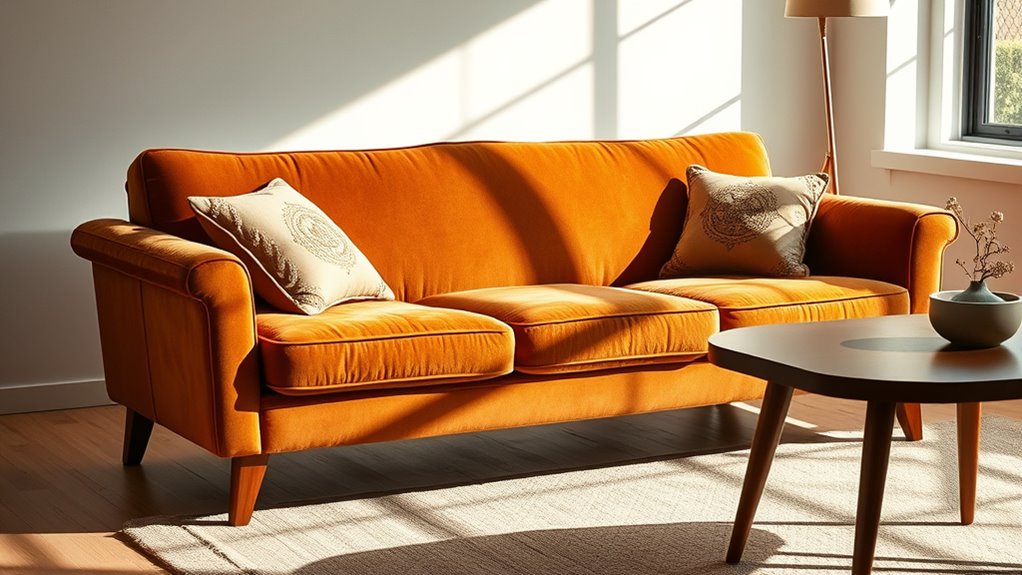
Finding the perfect vintage couch can transform your living space into a stylish and cozy haven, but choosing the right one requires careful consideration. When it comes to vintage pieces, especially those rooted in mid-century design, you’re balancing more than just aesthetics—you’re also thinking about how well it fits your lifestyle. Mid-century design is known for its clean lines, organic curves, and timeless appeal. It offers a sense of nostalgia while maintaining a fresh look that can elevate your decor. But beyond style, modern functionality is essential. You want a piece that not only looks great but also serves your everyday needs comfortably.
Start by evaluating your space and your daily routines. Vintage couches rooted in mid-century design often feature slim legs and minimal ornamentation, which can make a room feel more open and airy. They tend to be compact but offer surprisingly comfortable seating if chosen wisely. If you entertain often or have a family to accommodate, look for a vintage couch that provides ample seating without sacrificing style. Modern functionality means considering elements like deep cushions, supportive frames, and durable fabrics that can stand up to regular use. Some vintage pieces may require reupholstering or reinforcement, but that’s part of the charm—adding your personal touch. Additionally, understanding the design principles behind mid-century furniture can help you identify authentic pieces and appreciate their craftsmanship more deeply.
Evaluate your space and routines to choose a vintage couch that balances comfort, style, and functionality.
When choosing based on comfort versus style, remember that mid-century design doesn’t have to mean sacrificing comfort. Many vintage couches from this era are praised for their ergonomic shapes and plush cushions. Test out different pieces in person if possible, paying attention to how they support your body and whether the proportions suit your height and sitting preferences. If a sleek, stylish vintage couch catches your eye but feels a little stiff, consider options to enhance its comfort—such as replacing cushions or adding a throw blanket. Conversely, if comfort is your priority, look for vintage designs with thicker padding and softer fabrics, which can be just as visually appealing if styled correctly.
Finally, think about how the vintage piece will blend with your existing decor. Mid-century design is versatile, pairing well with modern, eclectic, or even industrial interiors. It’s all about finding a balance that resonates with your personal style. In the end, choosing a vintage couch that harmonizes style with functionality isn’t just about aesthetics; it’s about creating a space where you feel comfortable and inspired every day. When you find that perfect piece, your living room becomes more than just a place to sit—it becomes a reflection of your personality and taste.

IDEALHOUSE 81" Mid-Century Modern Leather Sofa for Living Room, Chesterfield Sofa with Deep Seats and 2 Pillows, 3 Seater Couch with Button Tufted, Leather Couch for Apartment, Office, Green
Exquisite Luxury Design:Elevate your space with this 81-inch leather couch, featuring a sophisticated button-tufted design for timeless elegance….
As an affiliate, we earn on qualifying purchases.
As an affiliate, we earn on qualifying purchases.
Frequently Asked Questions
How Can I Verify the Authenticity of a Vintage Couch?
To verify the authenticity of a vintage couch, start by examining authenticity markers like original labels, stamps, or manufacturer marks. Check the craftsmanship, materials, and construction techniques typical of the era. You should also research provenance verification details, such as previous ownership or documentation. Consulting an expert or appraiser can provide additional assurance. Combining these steps helps guarantee you’re investing in a genuine vintage piece with verified history.
What Are the Best Ways to Restore Vintage Upholstery?
You can restore vintage upholstery effectively by starting with gentle upholstery cleaning to remove dirt and stains. Don’t worry about damage—fabric repair techniques like patching or re-stuffing can revive worn areas. Using eco-friendly cleaners and professional fabric repair methods guarantees your vintage couch looks beautiful and feels comfortable. This approach preserves its charm while enhancing durability, so you enjoy a restored piece that combines style and comfort seamlessly.
How Do Vintage Couches Compare in Durability to Modern Ones?
Vintage couches often boast impressive durability due to high-quality craftsmanship and sturdy materials used in the past, giving you vintage durability that can last decades. However, modern furniture tends to prioritize longevity with advanced materials and construction techniques, offering you reliable modern longevity. While vintage pieces might require more maintenance, they can outlast many modern couches if properly cared for, making them a lasting investment for your space.
What Are Common Signs of Structural Damage in Vintage Furniture?
Like a ship showing signs of wear, vintage furniture can reveal its age through specific issues. You’ll notice woodworm signs, such as tiny holes or powdery residue, and joint looseness that causes wobbling or creaking. These are common indicators of structural damage. If you detect these signs, it’s wise to assess the extent of the damage before purchasing or restoring, ensuring your vintage piece remains sturdy and beautiful.
How Should I Maintain Vintage Fabric and Wood Finishes?
To maintain vintage fabric and wood finishes, you should focus on fabric preservation by regularly vacuuming and spot-cleaning with gentle solutions. Avoid direct sunlight to prevent fading. For wood refinishing, dust often with a soft cloth and apply a quality furniture polish or wax periodically. Keep humidity levels stable to prevent cracking or warping. Proper care guarantees your vintage pieces stay beautiful and functional for years to come.

ENJOYBIRDAL Boho Throw Pillow Covers Vintage Couch Pillow Covers 18×18 Farmhouse Square Accent Cushion Covers with Zipper Living Room Tassels Set of 2 Pillow Shams
【Package & Size】: Set of 2 boho square throw pillow covers measure 18×18 inches, without inserts.
As an affiliate, we earn on qualifying purchases.
As an affiliate, we earn on qualifying purchases.
Conclusion
Ultimately, finding the perfect vintage couch is like striking a delicate balance on a tightrope between comfort and style. Trust your instincts to guide you through the maze of options, and remember, it’s the piece that feels like an old friend yet looks like a work of art. When you sit down, let the sofa’s charm wrap around you like a warm embrace, transforming your space into a cozy, stylish haven you’ll love coming home to.

How to Use Upholstery: Complete Furniture Upholstery Guide for Beginners – Professional Techniques for Restoration and Reupholstering Projects
As an affiliate, we earn on qualifying purchases.
As an affiliate, we earn on qualifying purchases.

Antetek Couch and Loveseat Set with Storage, Chesterfield Mid-Century Vintage Velvet Fabric Deep Seat Comfy Sofa Couch with 14 Throw Pillows, Nailhead Trim for Living Room Bedroom Office, Black
Mid Century Modern Couch: This vintage couch showcases the iconic chesterfield style reimagined in a sleek, minimalist design….
As an affiliate, we earn on qualifying purchases.
As an affiliate, we earn on qualifying purchases.