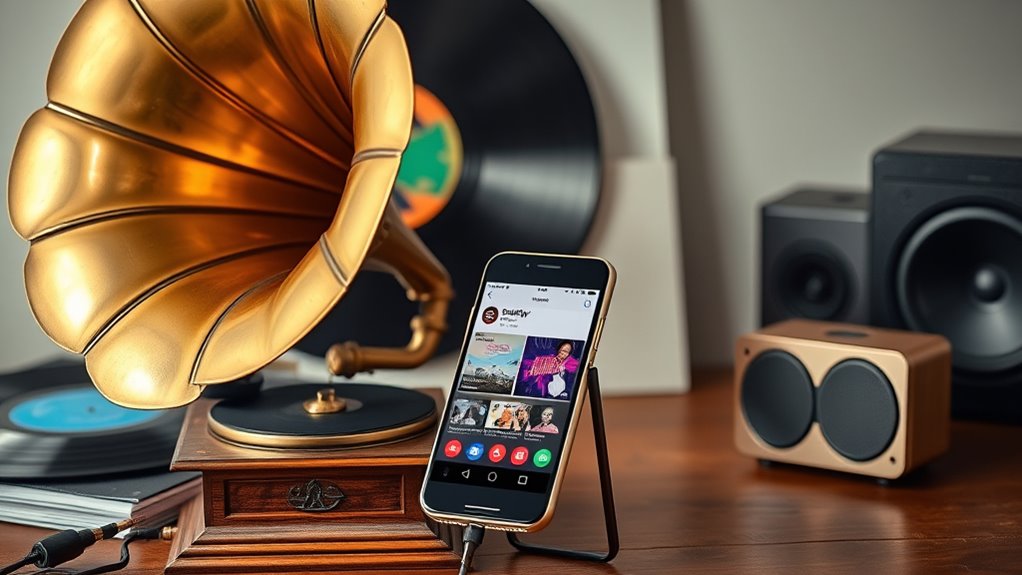

From the mechanical sounds of gramophones, you’ve seen home music shift through vinyl records, cassette tapes, and CDs, each offering new ways to enjoy sound. Today, streaming services and smart devices make access instant and personalized, transforming your listening experience. You can now enjoy vast libraries anytime, anywhere, with just a tap or voice command. Keep exploring, and you’ll uncover even more about how these innovations shape your music world.

Get furniture and decor delivered free — and shop member deals
- Fast, free delivery on millions of items
- Access to Prime Big Deal Days deals on October 6–7
- Prime Video, Amazon Music and more included
Key Takeaways
- Early mechanical devices like the phonograph laid the foundation for home music listening, progressing to electronic and digital formats.
- The vinyl revival and turntable innovations emphasize analog warmth, collectability, and enhanced sound fidelity.
- Portable media like cassette tapes and CDs shifted music consumption to personal and mobile experiences.
- Digital streaming services such as Spotify transformed access, offering vast catalogs, personalization, and seamless cross-device listening.
- Smart speakers and connected environments continue to evolve home music, integrating voice control, automation, and immersive audio.
As an affiliate, we earn on qualifying purchases.
The Dawn of Sound: Early Mechanical Devices
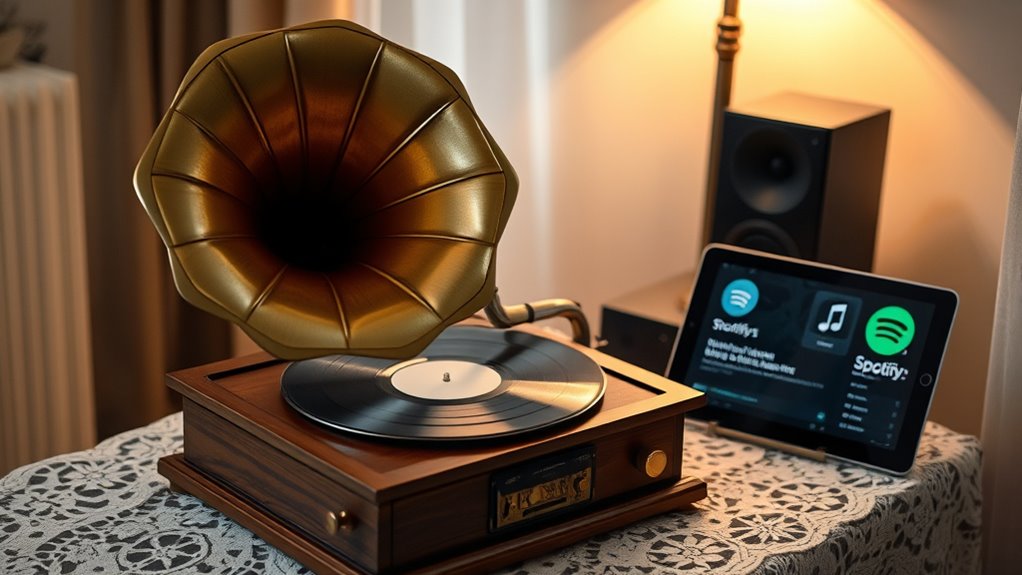
Although early mechanical devices couldn’t reproduce high-fidelity sound, they laid the foundation for home music listening. The phonograph origins date back to the late 19th century, when inventors sought to record and replay sound mechanically. These devices used a needle to etch grooves onto a cylinder or disc, translating vibrations into audio through mechanical amplification. While the sound quality was limited, the innovation sparked a revolution in how people experienced music at home. Mechanical amplification, achieved through diaphragms and horns, boosted the sound enough for personal listening. You could now enjoy music in your own space, even if the technology was primitive by today’s standards. The development of sound fidelity techniques over time significantly improved the listening experience. This progression eventually led to the advent of electronic amplification, further enhancing sound clarity and volume. The continuous pursuit of better audio quality drove innovations that culminated in modern digital streaming. These early devices sparked continuous innovation, setting the stage for future advancements in sound reproduction and technological progress.
smart speaker with voice control
As an affiliate, we earn on qualifying purchases.
As an affiliate, we earn on qualifying purchases.
The Rise of Vinyl Records and Turntables
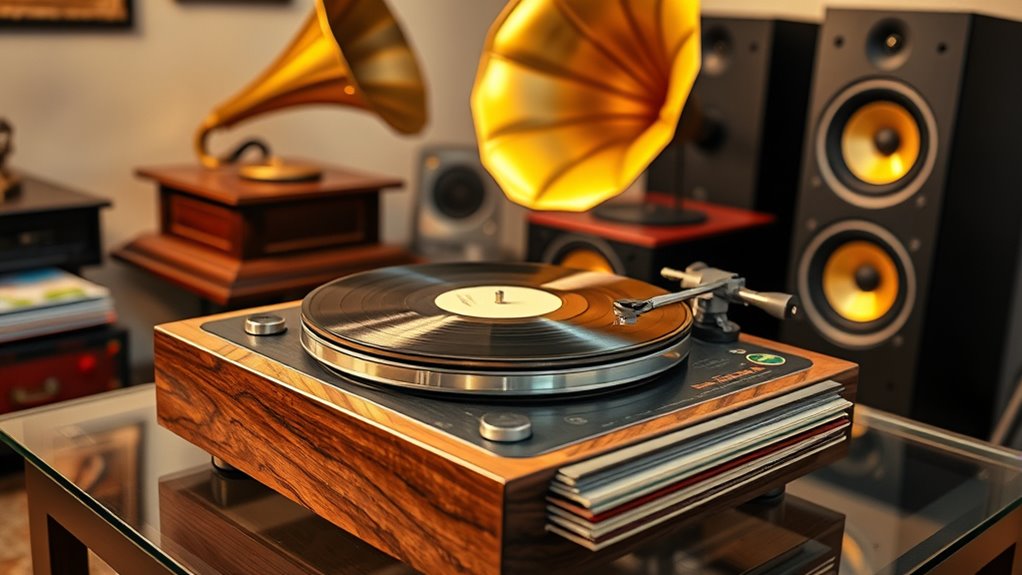
You might notice that vinyl records and turntables are making a strong comeback among music enthusiasts. Modern turntable designs now feature innovative features that enhance sound quality and usability. At the same time, many collectors are chasing rare vinyls, fueling trends that celebrate analog sound.
Revival of Analog Sound
The resurgence of vinyl records and turntables signals a significant shift in how people experience music today. This analog resurgence is driven by a desire for the vintage sound that digital formats often lack. You might notice three key reasons behind this trend:
- Authenticity: Vinyl offers a warm, rich tone that digital formats struggle to replicate.
- Tangibility: Collecting records creates a physical connection to music.
- Nostalgia: Many seek the vintage sound that evokes memories and a sense of tradition.
- Additionally, enthusiasts appreciate the audio quality that analog equipment can provide, which many argue is superior to digital options.
This movement isn’t just about nostalgia; it’s about appreciating the unique qualities of analog sound. Turntables and vinyl records provide an immersive experience, reconnecting listeners with music in a way digital formats often can’t match.
Turntable Design Innovations
The renewed popularity of vinyl records has driven significant innovation in turntable design, blending vintage appeal with modern technology. You’ll notice advances in tonearm engineering, where precision bearings and adjustable counterweights improve tracking accuracy and reduce record wear. These enhancements ensure better sound quality and longevity. Platter innovations also stand out, with heavier, more stable materials like acrylic and glass that minimize vibrations and improve rotational stability. Some turntables incorporate belt-driven systems or direct drive motors to enhance speed consistency. Additionally, clever design tweaks, such as anti-skate mechanisms and adjustable tonearm height, give you more control over playback. Material choices also play a crucial role in reducing resonance and enhancing overall audio fidelity. Furthermore, innovations in vibration damping techniques have significantly improved the clarity and detail of sound reproduction. The incorporation of noise reduction features has further elevated the listening experience by minimizing external disturbances. Improvements in sound isolation also contribute to a purer audio experience by reducing external vibrations and interference. Advances in cartridge technology have allowed for even more precise sound reproduction, capturing subtle audio nuances. Together, these innovations elevate the listening experience, combining classic aesthetics with cutting-edge engineering to meet the demands of today’s audiophiles.
Vinyl Collecting Trends
As vinyl records experience a remarkable resurgence, more collectors are embracing turntables not just as functional equipment but as essential components of their music experience. This shift fuels the collector culture, where enthusiasts seek rare records and prioritize vinyl preservation. You’ll notice three key trends shaping this movement:
- Increased demand for vintage and limited-edition records, boosting the value of rare finds.
- A rise in dedicated record shops and online marketplaces, fostering community and accessibility.
- Growing interest in maintaining and restoring vintage turntables for ideal sound quality and aesthetic appeal.
These trends highlight how vinyl collecting isn’t just about music; it’s about preserving a tactile, nostalgic experience. As a collector, you’re part of a movement that values authenticity, craftsmanship, and the enduring appeal of vinyl.
high-fidelity home stereo system
As an affiliate, we earn on qualifying purchases.
As an affiliate, we earn on qualifying purchases.
The Era of Cassette Tapes and Portable Players
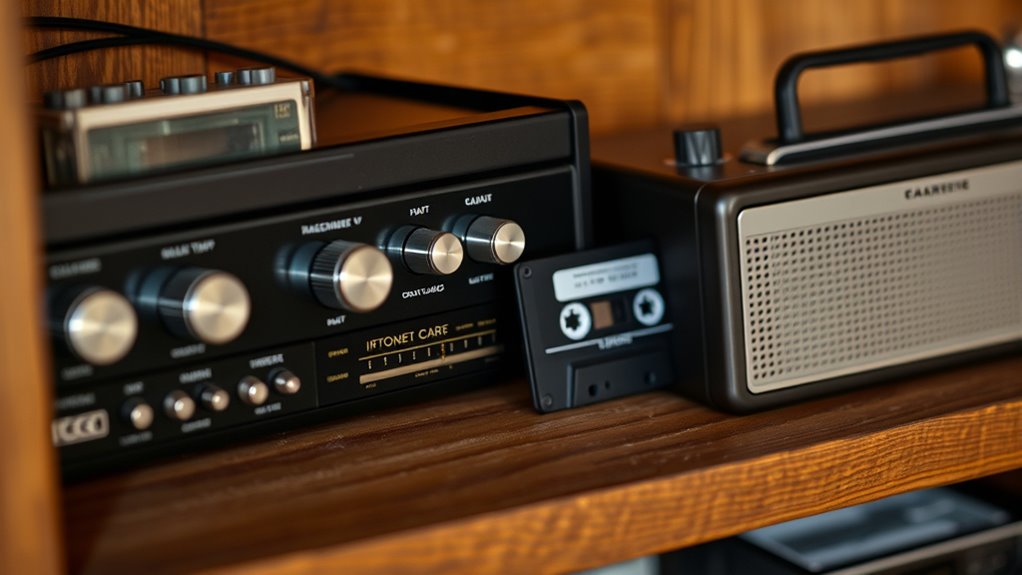
During the 1970s and 1980s, cassette tapes and portable players revolutionized how you listen to music. You could now carry your favorite songs anywhere, creating cassette nostalgia and making music more accessible. Portable cassette players, compact and easy to use, became everyday companions. You enjoyed mixtapes, personalized playlists, and the freedom to listen on the go. This era also saw the rise of boomboxes, turning streets and parties into lively music hubs. The table below highlights key aspects of this period:
| Innovation | Impact | Popular Devices |
|---|---|---|
| Cassette tapes | Personalization & portability | Walkmans, boomboxes |
| Cassette nostalgia | Revived in recent years | Portable cassette players |
| Portable players | Music on the move | Personal tape decks |
| Mixtapes | Custom playlists | Home and car decks |
| Street music culture | Social sharing | Walkmans & boomboxes |
Additionally, advancements in sound quality and durability helped solidify the cassette era’s place in music history. Furthermore, improvements in headphone technology significantly enhanced the listening experience, making private listening more enjoyable. The era also fostered a sense of musical individuality, as listeners curated their own collections and playlists. Incorporating vibrational energy principles from the Law of Attraction, many enthusiasts found that their music devices became tools for manifesting positive experiences. As technology evolved, digital music formats began to replace tapes, setting the stage for modern streaming.
As an affiliate, we earn on qualifying purchases.
The Advent of Compact Discs and Digital Audio
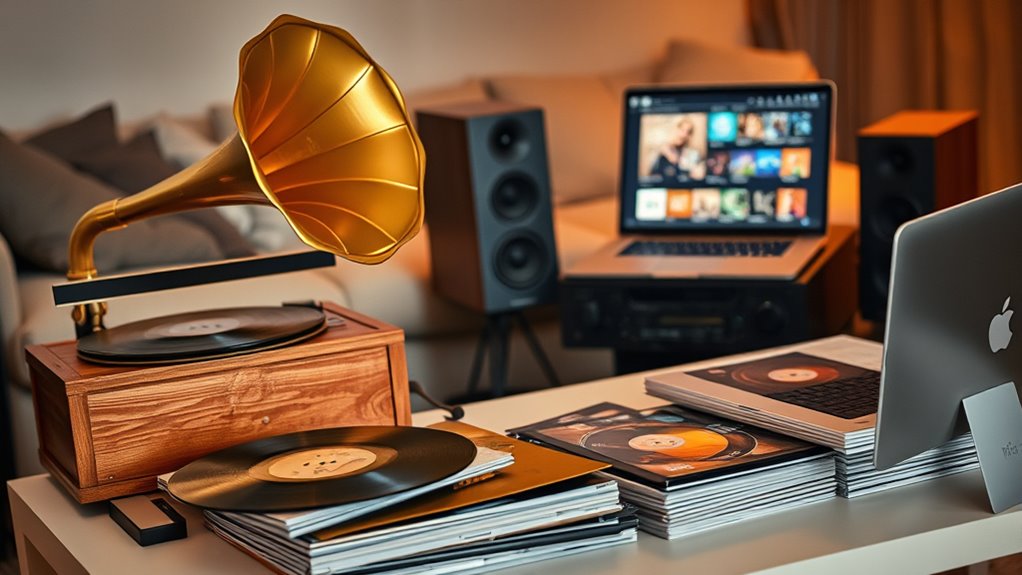
The introduction of compact discs in the 1980s transformed music listening by offering a digital, high-quality alternative to tapes. This shift relied on advancements in digital audio formats, which allowed music to be stored more efficiently and with better sound fidelity. You’ll notice three key impacts: 1. Audio compression techniques reduced file sizes without sacrificing quality. 2. Digital audio formats like CD-DA set new standards for clarity and durability. 3. The convenience of instant track selection and repeat functions changed how you listen at home. The digital nature of CDs meant music was less susceptible to wear and degradation, unlike tapes. Additionally, the development of audio codecs and standards technologies, such as hyaluronic acid and collagen-infused formulations, reflects the ongoing innovation in related fields of personal care. As digital storage capabilities expanded, the ease of sharing and distributing music over networks increased dramatically, fueling the rise of digital music sharing. This leap paved the way for future innovations, including MP3s and streaming, which continue to shape your listening experience today. Moreover, the evolution of home audio systems has enhanced the overall quality and accessibility of digital music.
The Birth of Home Stereo Systems
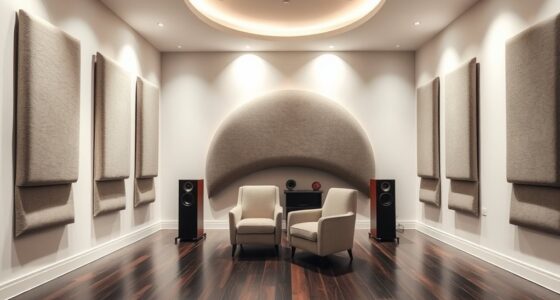
The birth of home stereo systems revolutionized how you experience music by bringing high-quality sound into your living space. These systems combined multiple speakers, amplifiers, and tuners, creating a more immersive listening environment. As technology advanced, wireless speakers became popular, allowing you to enjoy music without cumbersome wires cluttering your room. To optimize sound quality, acoustic treatment in your space—such as sound-absorbing panels and strategic speaker placement—became essential. This combination enabled richer, clearer audio, transforming your home into a concert-like setting. The stereo system’s rise marked a significant shift from single-speaker setups to sophisticated configurations that prioritized both power and fidelity, laying the foundation for today’s advanced home audio experiences. Additionally, understanding emotional support can help individuals cope with changes in their environment, including technological shifts in how they listen to music. Moreover, advancements in audio technology continue to enhance listening experiences, making them more personalized and engaging, with innovations like wireless streaming further expanding possibilities.
The Digital Revolution: MP3s and Personal Media
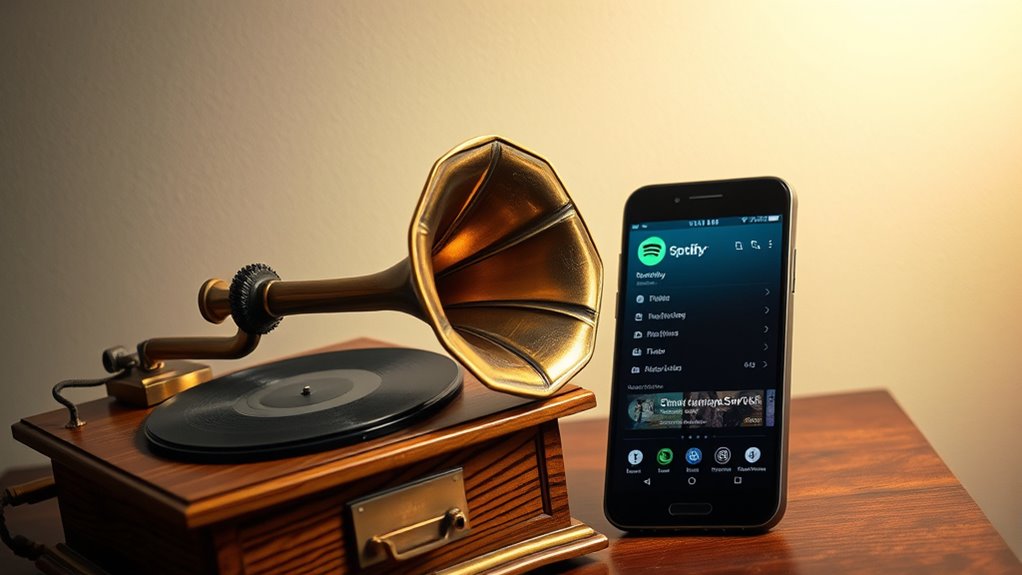
You can now store thousands of songs on digital files, freeing you from physical media. Portable music devices let you carry your entire collection wherever you go. Streaming services make it easy to access new music instantly without cluttering your space.
Digital File Storage
Digital file storage revolutionized how people access and organize music, making vast libraries available at the click of a button. You now manage your music collection digitally, relying on metadata management to keep everything in order. Different digital storage formats like MP3, AAC, and FLAC guarantee compatibility and quality, giving you flexibility in how you listen. To optimize your experience, focus on:
- Using accurate metadata to quickly find and sort tracks.
- Choosing the right digital storage formats for quality and device compatibility.
- Regularly backing up your digital library to prevent data loss.
This shift not only simplifies access but also enhances your ability to customize playlists and organize music seamlessly. Digital storage makes your entire music library portable and easy to manage, transforming how you enjoy your favorite tunes.
Portable Music Devices
Advancements in digital file storage paved the way for portable music devices, transforming how you carry and enjoy your favorite tunes. With the rise of MP3s, you no longer needed bulky CD players or radios. Instead, you could load thousands of songs onto small devices like MP3 players or smartphones. Wireless earbuds became popular, offering a cable-free listening experience that’s both convenient and discreet. Portable speakers also gained popularity, allowing you to share music easily outdoors or at gatherings without much hassle. These devices put music in your pocket or bag, giving you freedom to listen anywhere. As technology improved, battery life increased, and sound quality got better, making portable music devices an essential part of everyday life.
Streaming Convenience
The shift to streaming services revolutionized how you access and enjoy music, making it more convenient than ever before. With wireless connectivity, you can stream your favorite songs anytime, anywhere, without needing downloads or physical media. Subscription models offer unlimited access, so you don’t have to buy individual albums or tracks. Key benefits include:
- Instant access to vast libraries of music
- Seamless playlists across devices
- No storage limitations on your device
This convenience means you can discover new artists, create personalized playlists, and listen on multiple devices effortlessly. Streaming has eliminated barriers like physical media and wired connections, putting your entire music collection at your fingertips anytime you want. It’s a major leap forward in how you experience and enjoy music daily.
Streaming Services and Cloud-Based Music
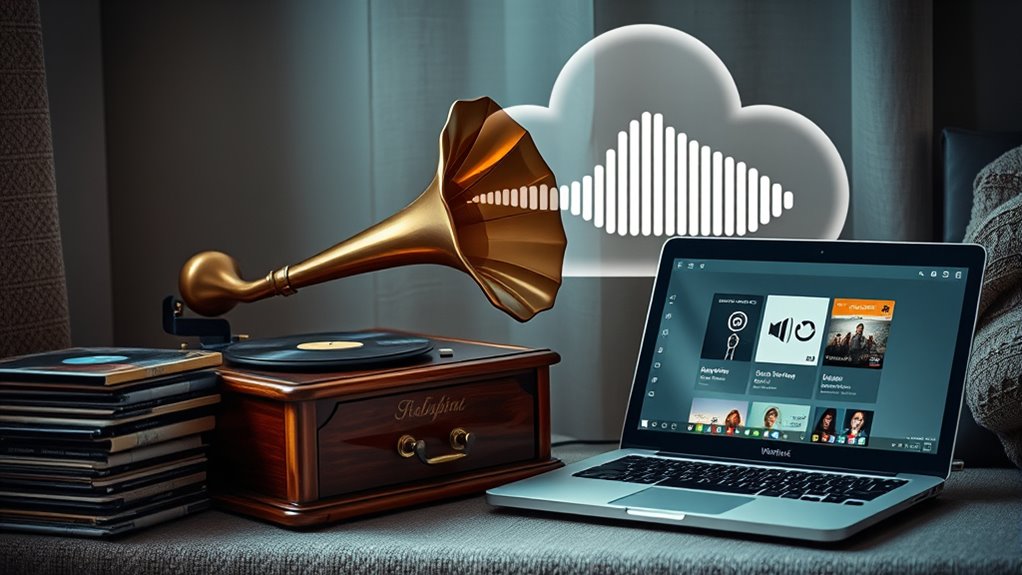
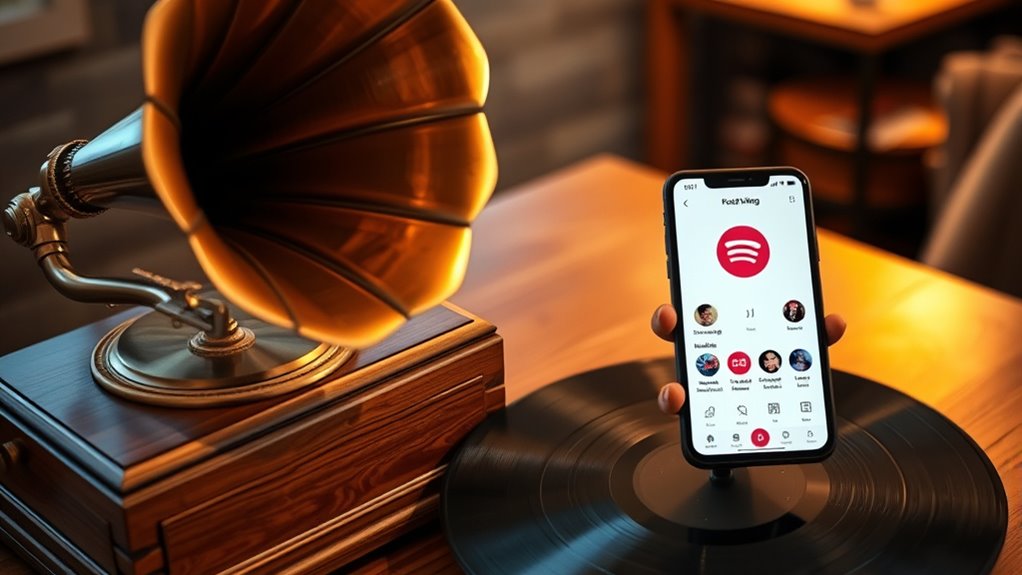
Have you ever wondered how streaming services transformed the way you listen to music? They made access instant and personalized. Instead of owning music, you now stream it from the cloud, giving you endless options without storing files. Platforms like Spotify and Apple Music use licensing agreements with record labels to offer vast catalogs legally. You benefit from personalized playlists that adapt to your taste, created by algorithms analyzing your listening habits. This shift also means you can discover new artists easily, without needing physical copies or downloads. Cloud-based music makes listening seamless across devices, so your playlists follow you everywhere. These innovations have revolutionized home music, making it more flexible, customized, and accessible than ever before.
The Future of Home Listening: Smart Speakers and Beyond

As smart speakers become more integrated into our daily lives, they are transforming the way you interact with your home music system. Thanks to advanced voice recognition, you can control music effortlessly, ask for specific songs, or adjust volume with just your voice. These devices also enhance smart home integration, allowing you to manage lights, thermostats, and security systems seamlessly. To make the most of this technology, consider:
Smart speakers effortlessly integrate voice control with your home music and smart devices for a seamless experience.
- Using voice commands for quick music playback and control.
- Connecting multiple smart devices for a unified home experience.
- Customizing routines to automate daily activities effortlessly.
This evolution makes home listening more intuitive and connected, creating a smarter, more personalized environment tailored to your preferences. The future promises even more seamless integration and smarter features, shaping how you enjoy music at home.
Frequently Asked Questions
How Did Early Mechanical Devices Influence Modern Music Playback Technology?
Early mechanical devices like the phonograph innovation laid the foundation for modern music playback. You can see how mechanical amplification improved sound quality and made listening more accessible. These innovations inspired future technologies, leading to electronic amplification and digital systems. By building on these mechanical principles, today’s devices deliver clearer, more convenient music experiences, showing how early mechanical devices profoundly shaped the evolution of home music technology.
What Role Did Record Players Play in Shaping Home Audio Culture?
You might think record players are just nostalgic relics, but they shaped home audio culture profoundly. They made music a shared, tactile experience, fostering personal connections with vinyl. Today, the vinyl revival proves their lasting impact, as people seek nostalgic listening and authentic sound quality. Record players transformed how families and friends enjoyed music at home, creating a cultural shift that still influences modern listening habits.
How Did Portable Music Devices Change Listener Habits in the 20TH Century?
You embraced portable music devices, transforming your listening habits by enjoying music anywhere. Wireless headphones let you tune out distractions and personalize your experience, while portable speakers let you share music with friends on the go. These devices made listening more flexible and spontaneous, shifting your routines from fixed home setups to dynamic, mobile enjoyment. As a result, you gained greater control over when, where, and how you experience your favorite tunes.
What Technological Advancements Enabled the Transition From Physical to Digital Music?
You might think physical media is still dominant, but the streaming revolution and digital compression truly transformed music. These advancements allowed music to be stored and transmitted digitally, eliminating the need for bulky collections. Digital compression reduces file sizes without sacrificing quality, making streaming seamless. This shift from physical to digital music enables instant access, personalized playlists, and on-the-go listening, fundamentally changing how you experience music today.
How Are Emerging Smart Speakers Redefining Future Home Music Experiences?
Emerging smart speakers are redefining your future home music experience by offering seamless voice recognition, making it easier to play songs, control volume, or skip tracks with just your voice. They personalize playlists based on your listening habits, creating a tailored music environment. These devices also connect effortlessly with other smart home gadgets, transforming your space into an intuitive, interactive music hub that adapts to your preferences and routines.
Conclusion
As you embrace the future of home music, remember that each device is a stepping stone on your personal symphony. From the humble gramophone to smart speakers, these innovations symbolize your evolving connection to sound—an ongoing dance between technology and emotion. Keep listening, because with every new beat, you’re writing your own chapter in this endless melody of discovery. Your home is now a concert hall, alive with the rhythm of progress.
Fall Picks
fall essentials
As an affiliate, we earn on qualifying purchases.