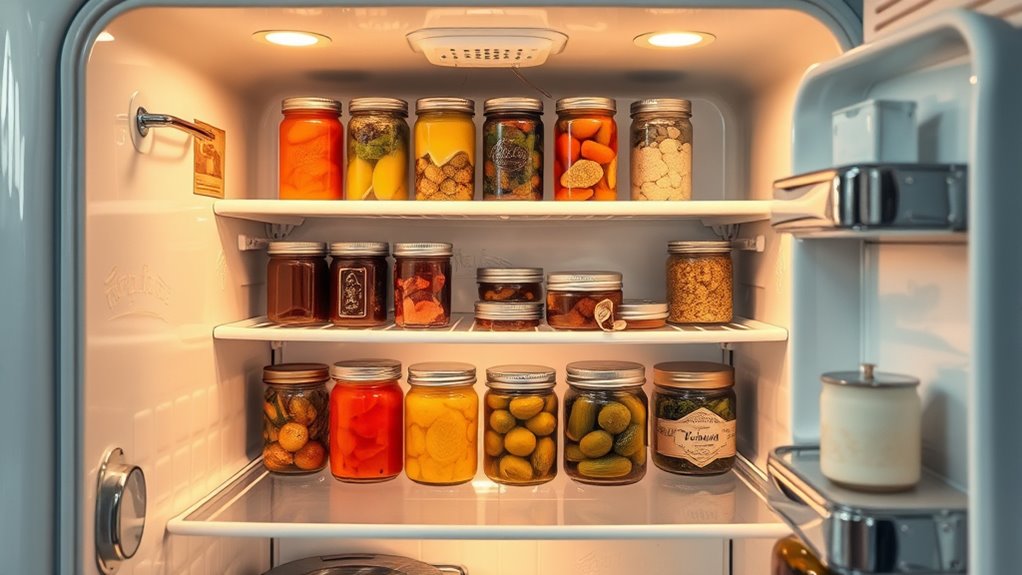

Inside a classic refrigerator, you’ll find key components working together to keep your food cold. The compressor compresses refrigerant gas, pushing it through condenser coils to release heat. The refrigerant then flows through an expansion valve into the evaporator, absorbing heat and cooling the interior. You’ll also see insulation to maintain efficiency and door seals to prevent leaks. Exploring more about these parts reveals how a vintage fridge performs so effectively—stay tuned to learn more.

Get furniture and decor delivered free with Prime
- Fast, free delivery on millions of items
- Prime Video, Amazon Music and more included
- Member-only deals all year
Key Takeaways
- Classic refrigerators feature a compressor, condenser coils, expansion valve, and evaporator to regulate temperature.
- Vintage insulation materials like foam or fiberglass improve thermal efficiency but may degrade over time.
- Interior and door seals are crucial for maintaining cold air and preventing energy loss.
- The refrigerant cycle involves compressing, condensing, expanding, and evaporating to cool the interior.
- Restoration often includes cleaning coils, sealing leaks, replacing insulation, and upgrading seals for optimal performance.

A retro fridge isn’t just a nostalgic kitchen piece; it’s a carefully designed appliance that combines vintage style with modern functionality. When you look inside, you’ll notice that its architecture balances aesthetic charm with practical engineering. These refrigerators often feature distinctive chrome handles, colorful exteriors, and rounded edges, but beneath that charming exterior lies a complex system of components working seamlessly together. To keep a retro fridge running efficiently, you need to understand its anatomy, especially if you’re considering restoration techniques to improve energy efficiency or extend its lifespan.
At the core of the retro fridge’s operation is the refrigeration system. This includes the compressor, condenser coils, expansion valve, and evaporator. The compressor, often located at the bottom or back, compresses refrigerant gas, creating high pressure and temperature. The refrigerant then flows through the condenser coils, where it releases heat and cools down. From there, it passes through the expansion valve into the evaporator, absorbing heat from the interior and lowering the temperature inside the fridge. Restoring these components to *crucial* condition requires precise techniques, such as cleaning or replacing clogged condenser coils, sealing leaks in refrigerant lines, and ensuring the compressor functions smoothly. These restoration techniques improve energy efficiency by reducing the workload on the compressor, which is especially important in vintage models that weren’t originally designed with modern energy standards.
The insulation is another *vital* element inside a retro fridge. Originally, they used thick foam or fiberglass to keep cold air in and warm air out. Over time, insulation can degrade or settle, reducing efficiency. Restoring insulation involves careful removal of old, compressed materials and replacement with modern, eco-friendly insulation options that maintain the vintage look but provide better thermal performance. This process helps cut down on energy consumption because the fridge doesn’t have to work as hard to maintain its temperature.
Finally, the interior and door seals play a *key* role in maintaining efficiency. Vintage seals tend to deteriorate, causing cold air leaks. Restoring these involves replacing old rubber gaskets with new, high-quality seals that fit snugly. This simple step not only preserves the aesthetic appeal but also *considerably* enhances energy efficiency. When you understand the anatomy of your retro fridge and apply the right restoration techniques, you’re not just preserving its vintage charm—you’re ensuring it runs more efficiently and reliably for years to come.
retro refrigerator condenser coil cleaning kit
As an affiliate, we earn on qualifying purchases.
As an affiliate, we earn on qualifying purchases.
Frequently Asked Questions
How Energy-Efficient Are Retro Refrigerators Compared to Modern Models?
Retro refrigerators tend to be less energy-efficient than modern models because of their higher energy consumption and outdated insulation quality. You might notice they use more power to maintain cool temperatures, which increases your energy bills. While they have vintage charm, upgrading to a newer fridge with better insulation and energy-saving features can save you money and reduce your environmental impact over time.
What Are the Common Maintenance Issues With Vintage Fridges?
You often face maintenance issues with vintage fridges, especially with the vintage compressor, which can wear out over time, causing noise or cooling problems. Door gasket issues are common too, leading to air leaks and higher energy use. Regularly inspect and replace the gasket if needed, and consider servicing the compressor to keep your retro fridge running smoothly. Proper maintenance guarantees longevity and peak performance.
Can Retro Refrigerators Be Customized or Restored Easily?
Think of your retro fridge as a vintage car needing a bit of care. Restoration techniques and customization options make it quite manageable. You can easily restore its charm with paint touch-ups, replaced handles, and upgraded insulation. Customization options like adding modern features or personalized colors let your fridge reflect your style. With patience and some DIY spirit, you’ll turn your vintage piece into a functional, eye-catching retro masterpiece.
Are Retro Fridges Safe to Use With Current Electrical Standards?
Retro fridges are generally safe to use if they meet current electrical safety standards. You should check for vintage certifications or have a professional inspect the wiring to guarantee it complies with modern electrical safety codes. If the fridge is well-maintained or restored, it’s unlikely to pose risks. Always stay cautious and consider updating the power cord or components to guarantee safe operation within today’s electrical standards.
What Are the Best Practices for Cleaning and Preserving Vintage Finishes?
Did you know that properly maintaining vintage finishes can extend their life by up to 50%? To clean and preserve your retro fridge’s finish, use a soft cloth and gentle soap, avoiding abrasive cleaners. Apply a vintage polish periodically to enhance shine and protect the surface. Keep the finish protected from excessive moisture and direct sunlight, and always test cleaning products on a small area first to prevent damage.
vintage fridge door seal replacement
As an affiliate, we earn on qualifying purchases.
As an affiliate, we earn on qualifying purchases.
Conclusion
Now that you’ve peeked inside a retro fridge, you can appreciate its charm and craftsmanship. Remember, appearances aren’t everything—it’s what’s inside that counts. Just like an old friend, a classic fridge may look vintage, but it still keeps things fresh and cool. So, treasure the nostalgia and know that behind its stylish exterior lies a reliable heart, proving that sometimes, old school truly is the best school.
insulation for classic refrigerators
As an affiliate, we earn on qualifying purchases.
As an affiliate, we earn on qualifying purchases.
refrigeration system restoration tools
As an affiliate, we earn on qualifying purchases.
As an affiliate, we earn on qualifying purchases.
Halloween Picks
halloween
As an affiliate, we earn on qualifying purchases.