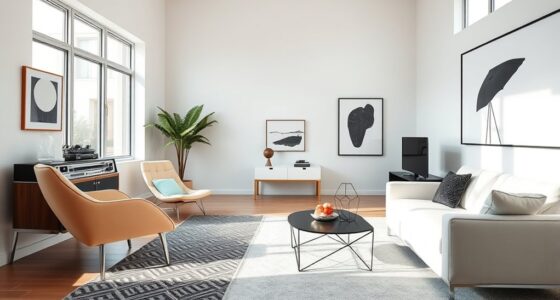

Modernist ideas from Bauhaus to mid-century modern markedly shape your home decor by emphasizing simplicity, functionality, and geometric forms. You’ll notice clean lines, minimal ornamentation, and neutral color palettes that create a calm, spacious feel. Materials like wood, metal, and glass are celebrated for their raw beauty, while sleek furniture and subtle motifs add visual interest. This timeless style promotes organized, uncluttered spaces that reflect thoughtful design—if you’re curious about how these principles continue to influence your environment, there’s more to explore.

Get furniture and decor delivered free with Prime
- Fast, free delivery on millions of items
- Prime Video, Amazon Music and more included
- Member-only deals all year
Key Takeaways
- Modernist ideas introduced minimalism, emphasizing clean lines, functionality, and simplicity in home decor.
- The Bauhaus movement popularized geometric patterns and sleek forms that influenced furniture and interior design.
- Mid-century modern style adopted neutral palettes and natural materials, promoting spacious, uncluttered environments.
- Both movements prioritized form following function, leading to practical yet stylish home furnishings.
- These design philosophies fostered timeless, adaptable aesthetics focused on balance, coherence, and material honesty.

Modernist ideas have profoundly transformed home decor by emphasizing simplicity, functionality, and clean lines. This shift is evident in how you approach decorating your space, favoring designs that prioritize purpose and clarity over ornamentation. One of the key elements that define this style is the use of geometric patterns. These patterns, characterized by shapes like circles, squares, and triangles, create a sense of order and harmony within a room. They appear in everything from textiles and rugs to wall art and furniture accents. Geometric patterns help break the monotony of plain surfaces while maintaining a sleek, modern aesthetic. They lend a dynamic visual interest that’s both sophisticated and straightforward, aligning perfectly with the modernist ethos of form following function. Attention to detail is crucial for achieving a balanced and cohesive look in modernist decor.
Modernist decor highlights geometric patterns that bring order, harmony, and a sleek aesthetic to your home.
Alongside geometric patterns, you’ll find that minimalist palettes are a hallmark of this design approach. Instead of overwhelming your space with a rainbow of colors, modernist decor favors neutral shades—think whites, blacks, grays, and earthy tones. These colors serve as a calming backdrop that enhances the clean lines and simple forms of modernist furniture and accessories. Using a minimalist palette doesn’t mean your home feels dull; rather, it creates a sense of spaciousness and clarity that invites relaxation. The restrained color scheme also allows other design elements—like textures, shapes, and materials—to stand out more prominently. This approach encourages you to focus on quality over quantity, choosing pieces that are both visually striking and highly functional. Incorporating visual balance helps maintain harmony throughout the space, ensuring each element complements the others.
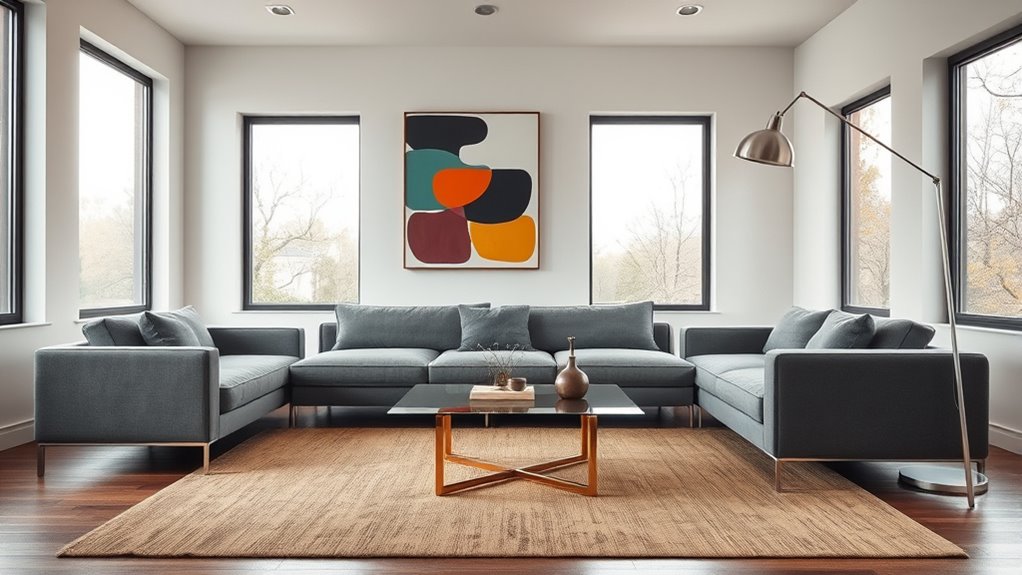
The combination of geometric patterns and minimalist palettes encourages you to think differently about space. Instead of cluttered or overly ornate environments, you learn to appreciate the beauty in restraint and structure. Modernist ideas challenge you to strip away unnecessary details, highlighting the raw beauty of materials such as wood, metal, and glass. You might opt for a sleek sofa with a simple silhouette, accented with textiles featuring subtle geometric motifs, all in a subdued color scheme. This creates a cohesive, balanced look that feels contemporary yet timeless. The emphasis on simplicity also makes it easier to maintain and update your decor over time, as each piece is chosen with purpose and clarity.
Ultimately, modernist ideas inspire you to create a home that’s both functional and visually harmonious. By embracing geometric patterns and minimalist palettes, you craft a space that feels open, organized, and effortlessly stylish. This approach to home decor isn’t about sacrificing personality but about expressing it through thoughtful, clean design elements that stand the test of time.
As an affiliate, we earn on qualifying purchases.
Frequently Asked Questions
How Did Bauhaus Influence Color Schemes in Modern Home Decor?
You notice Bauhaus’s influence in modern home decor through bold color contrast and minimalism. It emphasizes using striking color combinations to create visual interest while avoiding clutter. Bauhaus also employs color symbolism, where specific hues evoke emotions or meanings, guiding your choices for a cohesive space. This approach encourages you to experiment with contrasts and symbolism, making your home both functional and visually engaging, rooted in modernist principles.
What Materials Are Most Characteristic of Mid-Century Modern Furniture?
You’re about to discover the essence of mid-century modern furniture. It features striking materials like wood veneer, which adds warmth and elegance, and molded plastics that bring playful, innovative designs to life. These materials revolutionized furniture, making pieces lightweight yet durable. As you explore this style, you’ll see how these elements create a perfect balance of form and function, transforming everyday spaces into iconic, timeless interiors.
How Did Modernist Ideas Affect Interior Lighting Design?
Modernist ideas revolutionized interior lighting by emphasizing functionality and simplicity. You’ll notice a focus on ambient illumination that creates a warm, inviting atmosphere, and task lighting that enhances practicality in specific areas like kitchens or desks. Designers adopted clean lines and innovative fixtures, making lighting both stylish and purposeful. This approach guarantees your space feels modern, efficient, and visually balanced, aligning with modernist principles of form following function.
Are There Specific Design Principles From Bauhaus Still Relevant Today?
Think of Bauhaus principles as the blueprint for a well-organized room—you rely on their clear, functional approach. Their emphasis on the minimalist approach and functional aesthetics remains relevant today because they prioritize simplicity and purpose. You still see these ideas in modern design, where clean lines and practicality create timeless spaces. Bauhaus’s focus on function over form guides your choices, ensuring your home is both beautiful and efficient.
How Did Modernist Architecture Impact Small Space Home Layouts?
Modernist architecture revolutionized small space home layouts by emphasizing space-saving solutions and multifunctional furniture. You’ll find clever designs that maximize every inch, like fold-away beds or modular units that serve multiple purposes. This approach helps you create open, functional environments without clutter. By embracing these ideas, you can optimize your small space, making it feel more spacious and adaptable—perfect for modern living needs.
mid-century modern minimalist furniture
As an affiliate, we earn on qualifying purchases.
As an affiliate, we earn on qualifying purchases.
Conclusion
As you’ve seen, modernist ideas revolutionized home decor, emphasizing simplicity, functionality, and clean lines. These principles continue to influence your space today, blending form and function seamlessly. Isn’t it fascinating how a movement from the early 20th century still shapes your environment? By embracing these timeless designs, you create a space that’s both stylish and practical. So, why not incorporate a touch of modernist elegance and make your home truly reflect these enduring ideas?
As an affiliate, we earn on qualifying purchases.
neutral color palette throw pillows
As an affiliate, we earn on qualifying purchases.
As an affiliate, we earn on qualifying purchases.
Halloween Picks
halloween
As an affiliate, we earn on qualifying purchases.