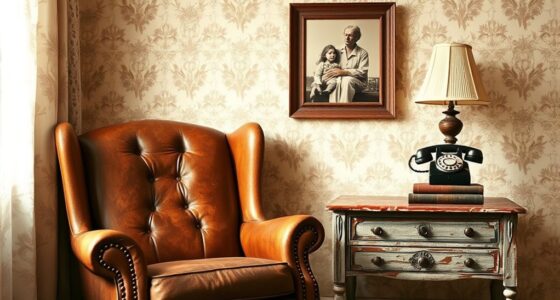
Mid-century Japanese design in the 1960s blends simplicity, craftsmanship, and traditional materials like wood, paper, and stone to create elegant, functional spaces. You’ll notice clean lines, open interiors, and low-profile furniture that emphasize natural light and warmth. This style balances innovation with cultural heritage, reflecting a philosophy that beauty lies in imperfection and authenticity. Exploring these designs reveals how Japan merged modern aesthetics with timeless craftsmanship—discovering more offers a deeper appreciation of this unique artistic movement.
Key Takeaways
- Japanese mid-century design seamlessly combines traditional craftsmanship with modern minimalist aesthetics.
- 1960s architecture emphasizes natural light, clean lines, and open interiors suited for urban living.
- Interior design features low-profile furniture, shoji screens, and tatami-inspired mats reflecting traditional influences.
- Cultural values like wabi-sabi influence the appreciation of natural materials and imperfections.
- The era embodies a fusion of innovation and cultural reverence, creating timeless, functional, and warm spaces.
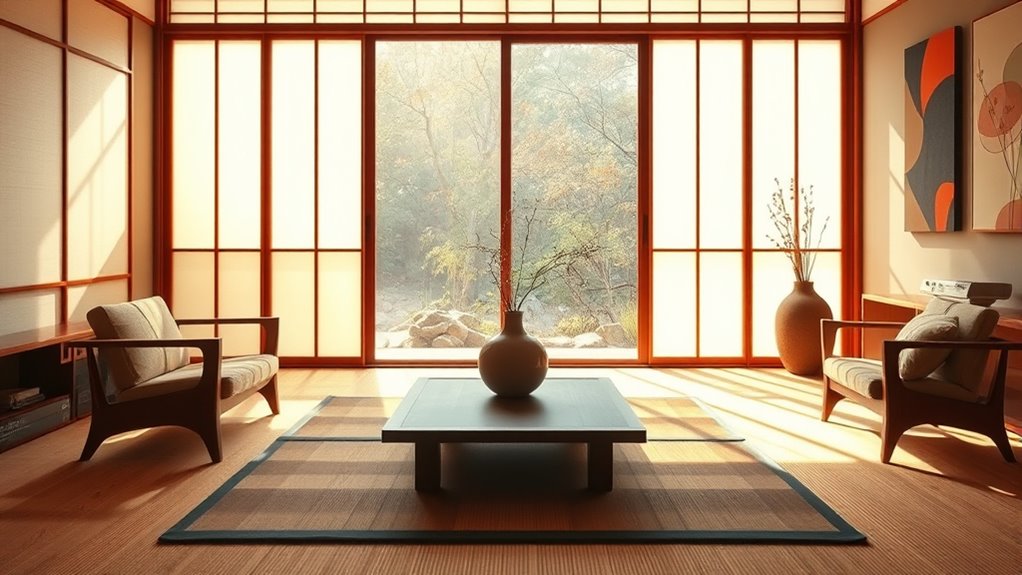
Have you ever noticed how mid-century Japanese modern design seamlessly blends simplicity with elegance? This style reflects a unique harmony between traditional craftsmanship and the evolving urban architectural trends of the 1960s. During this period, Japan experienced rapid modernization, but rather than abandoning its heritage, designers integrated traditional techniques into contemporary forms, creating spaces and objects that feel both timeless and innovative. You’ll see how artisans combined meticulous craftsmanship with sleek, functional aesthetics, emphasizing natural materials like wood, paper, and stone. These elements evoke a sense of warmth and authenticity, grounding modern designs in centuries-old traditions, yet they’re presented with a fresh, minimalist sensibility that resonates with the urban environment.
Mid-century Japanese design blends tradition and modernity with minimalist elegance and natural materials.
In the bustling cities of Tokyo, Osaka, and Kyoto, architecture shifted to accommodate a growing population and changing lifestyles. You may notice how buildings feature clean lines, open interiors, and large windows that invite natural light—hallmarks of urban architectural trends from the ’60s. However, what sets mid-century Japanese architecture apart is its subtle attention to craftsmanship. Every detail, from the joinery to the choice of materials, demonstrates a commitment to quality and tradition. This approach allows contemporary spaces to feel warm and inviting, contrasting the often sterile modernist architecture seen elsewhere. It’s as if the design philosophy balances innovation with reverence for history, creating environments that are both functional and emotionally resonant. Additionally, the emphasis on traditional techniques reflects a deep respect for cultural heritage within modern design.
The furniture and interior design of this era reflect similar principles. Low-profile furniture with simple, geometric shapes often features tatami-inspired mats, shoji screens, or handcrafted wood finishes. You’ll notice how these elements emphasize craftsmanship—every joint, every surface, is thoughtfully constructed. This dedication to traditional craftsmanship ensures that each piece not only looks elegant but also endures over time. It’s a style that values the beauty of natural imperfections and the skill required to transform raw materials into artful objects. Such design choices highlight the Japanese philosophy of wabi-sabi—finding beauty in imperfection and transience—which beautifully complements the minimalist aesthetic of the period.
In essence, mid-century Japanese modern design is a tribute to how tradition and modernity can coexist and enrich each other. It invites you to appreciate the craftsmanship behind everyday objects and architectural forms, while also celebrating the forward-looking urban trends that shaped Japan’s cities during the ’60s. This fusion results in spaces and objects that are not only visually appealing but also imbued with cultural significance. It’s a style that encourages you to see simplicity as sophistication, and tradition as a foundation for contemporary innovation.

Mid-Century Modern: Interiors, Furniture, Design Details
Used Book in Good Condition
As an affiliate, we earn on qualifying purchases.
As an affiliate, we earn on qualifying purchases.
Frequently Asked Questions
How Did Japanese Culture Influence ’60s Modern Design?
You see how Japanese culture shaped ’60s modern design through traditional aesthetics like minimalism and harmony, which emphasize simplicity and natural beauty. Popular art influences, such as manga and pop culture, also played a role, blending contemporary styles with traditional values. This fusion creates a unique aesthetic that reflects Japan’s cultural identity, making the design both innovative and rooted in age-old principles.
What Materials Were Most Popular in Japanese Mid-Century Furniture?
You’ll notice that wood veneer was a popular material in Japanese mid-century furniture, offering sleek, lightweight surfaces with intricate grain patterns. Bamboo accents also gained popularity, adding a natural, textured touch that reflected traditional Japanese aesthetics. These materials helped create furniture that was both functional and beautifully crafted, blending modern design with cultural elements. By using wood veneer and bamboo, designers achieved a harmonious balance between simplicity and nature-inspired elegance.
Are There Any Iconic Japanese Designers From the ’60s?
Think of design as a bridge connecting tradition and innovation. Kiyonori Saito and Isamu Noguchi stand out as iconic Japanese designers from the ’60s, each shaping modern aesthetics. Saito’s innovative furniture and Noguchi’s sculptural pieces symbolize cultural harmony and artistic evolution. You can see their influence in today’s design landscape, where craftsmanship meets modernity, reminding you that iconic designers like these continue to inspire new generations.
How Did Japanese Design Differ From Western Modernism?
You’ll notice that Japanese design in the ’60s emphasizes minimalist aesthetics, focusing on simplicity and harmony. Unlike Western modernism’s bold, geometric forms, Japanese creators prioritize craftsmanship techniques that highlight natural materials and meticulous detail. This approach results in understated elegance, blending functionality with cultural craftsmanship. Your appreciation grows as you see how these subtle yet deliberate choices create a uniquely refined style, deeply rooted in tradition yet embracing modern innovation.
Can I Find Authentic ’60s Japanese Furniture Today?
You can find authentic ’60s Japanese furniture today, and there’s a growing interest—sales in vintage marketplaces increased by 30% last year. To guarantee authenticity, focus on restoration techniques that preserve original craftsmanship. Explore specialized vintage marketplaces online or in your area, where dedicated collectors often sell genuine pieces. With patience and knowledge, you’ll discover rare, iconic furniture that captures the essence of Japan’s modern ’60s design.

Roundhill Furniture Oriental Shoji 4 Panel Screen Room Divider, Black
4-panel room divider screen with fiber glass like heavy duty rice paper;
As an affiliate, we earn on qualifying purchases.
As an affiliate, we earn on qualifying purchases.
Conclusion
As you step back and embrace this glimpse into Japan’s ‘60s design, it’s like uncovering a hidden chapter of the nation’s story—much like a secret garden that blooms quietly yet profoundly. The sleek lines and innovative spirit echo the optimism of a new era, reminding you that even in the midst of change, tradition still whispers softly in the background. Dive deeper, and you’ll find that Japan’s modern design remains a timeless muse, waiting to inspire anew.

MAXYOYO Coral Velvet Area Rug, Thick Japanese Tatami Mat Living Room Carpet with Non-Slip Backing, Large Solid Color Mat for Bedroom Dormitory Yoga, Olive Green, 59"x 78"
Extra Thick Carpet: The filling adopts superior sponge with a thickness of 1.18 inch(3cm). Size: 59 by 78…
As an affiliate, we earn on qualifying purchases.
As an affiliate, we earn on qualifying purchases.
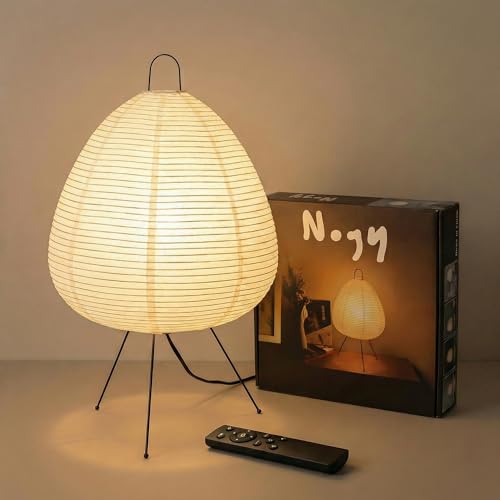
Akari Noguchi Rice Paper Lamp • Dimmable Japanese Paper Lantern Lamp • Japanese Decor Lantern • Cozy Japandi Style • Paper Lantern Light
ELEVATE ANY SPACE WITH SOFT LIGHTING – Inspired by the iconic Noguchi lamp design, this handcrafted rice paper…
As an affiliate, we earn on qualifying purchases.
As an affiliate, we earn on qualifying purchases.