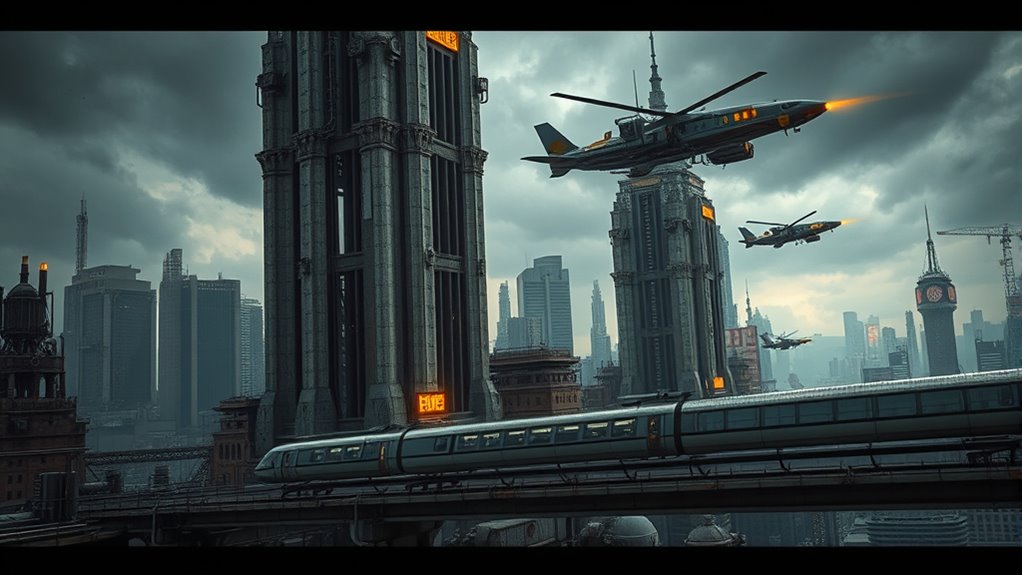

Discover how dieselpunk and atompunk expand the retro-futuristic landscape beyond steampunk. Dieselpunk captures the gritty, industrial vibe of the interwar period with sleek machines, art deco styles, and a dystopian edge rooted in war-torn worlds. Atompunk, inspired by the Atomic Age, emphasizes shiny surfaces, streamlined shapes, and nuclear themes reflecting both scientific progress and societal fears. Exploring these styles reveals unique visions of the past’s futuristic dreams—if you’re curious, there’s more to uncover.
Key Takeaways
- Dieselpunk and Atompunk expand retro-futurism beyond steampunk’s Victorian aesthetic, focusing on industrial grit and atomic-age sleekness.
- These styles draw from interwar and Atomic Age eras, emphasizing themes of technological optimism, dystopia, and societal decay.
- Visual elements include heavy machinery and gritty textures for Dieselpunk, contrasted with shiny metals and streamlined designs for Atompunk.
- Both styles explore complex narratives around technological progress, fears, and the duality of innovation’s utopian and dystopian potential.
- They serve as diverse, era-specific interpretations of retro-futurism, highlighting different historical influences and visions of the future.
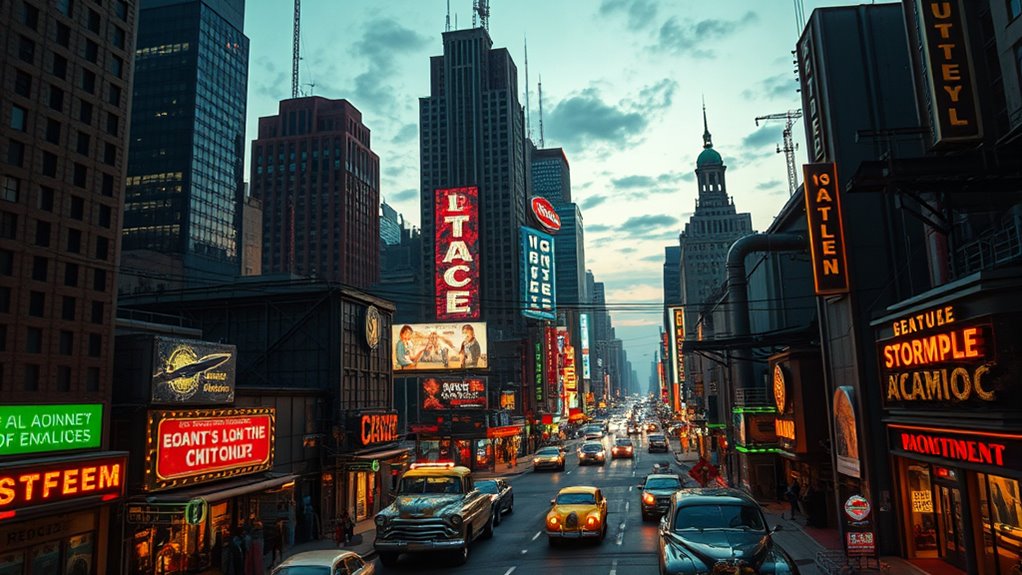
While steampunk often dominates discussions of retro-futuristic styles, there are many other inventive aesthetics that blend past visions of the future with unique flair. Two notable examples are dieselpunk and atompunk, each offering a distinct take on how history and technology collide. These styles push beyond the Victorian-inspired elegance of steampunk, embracing different eras and themes that evoke powerful imagery and storytelling. As you explore these genres, you’ll find they tap into diverse influences, from post-apocalyptic aesthetics to cyberpunk influences, creating worlds that feel both nostalgic and radically futuristic.
Dieselpunk draws heavily from the interwar period, especially the 1920s to 1950s, capturing the grit, optimism, and chaos of that era. You see this in the bold, industrial aesthetics—sleek airplanes, vintage automobiles, and art deco designs—yet with a dystopian twist. The post-apocalyptic aesthetics often merge with dieselpunk, imagining worlds ravaged by war or catastrophe, where makeshift technology and rugged resilience define survival. The style’s visual language emphasizes heavy machinery, gritty textures, and a sense of raw power, making it perfect for stories set in a universe where technology is both a tool and a weapon. Exploring the industrial design elements common in dieselpunk can deepen your appreciation for its unique visual identity.
Atompunk, on the other hand, is inspired by the Atomic Age, spanning roughly from the 1940s to the 1960s. It’s characterized by sleek, futuristic visions fueled by nuclear energy, with a focus on space exploration, sleek design, and scientific optimism. You might notice influences from science fiction films of the era, with shiny metal surfaces, streamlined shapes, and bright colors. Atompunk often incorporates cyberpunk influences, especially in its portrayal of technology’s double-edged nature—how innovation can bring wonder but also chaos. The post-apocalyptic aesthetics in atompunk manifest in nuclear wastelands or fallout scenarios, where technology’s destructive potential has reshaped the world.
Both styles challenge you to think about how history’s technological dreams and fears intersect. They blend the nostalgia of past eras with visions of futures that are often dark, gritty, or dystopian, yet infused with hope or danger. Cyberpunk influences echo in their focus on high-tech, low-life scenarios, where advanced gadgets coexist with societal decay. These aesthetics serve as a reminder that the past’s visions of tomorrow are complex, often containing both utopian dreams and dystopian nightmares. As you explore dieselpunk and atompunk, you’ll discover a rich tapestry of design and storytelling that expands the boundaries of retro-futuristic imagination beyond steampunk’s Victorian charm.
Frequently Asked Questions
How Do Dieselpunk and Atompunk Differ Visually From Steampunk?
You notice that dieselpunk and atompunk differ visually from steampunk through their darker, more industrial color palettes, like grays, blacks, and metallics, instead of the warm browns and coppers of steampunk. They also feature sleek, futuristic architecture with streamlined designs and advanced technology, contrasting the Victorian-inspired, ornate look of steampunk. These styles emphasize a gritty, war-torn, and industrial aesthetic, giving them a more modern, dystopian feel.
What Are Some Iconic Media Examples of Dieselpunk and Atompunk?
You’ll recognize iconic dieselpunk and atompunk examples in films like “Sky Captain and the World of Tomorrow,” which showcases film noir influences and atomic age design. “The Rocketeer” also highlights these styles with its vintage aviation aesthetic and 1930s-40s influences. In atompunk, “Fallout” games and “Batman: The Animated Series” feature atomic age design elements, emphasizing sleek, futuristic visuals rooted in mid-20th-century visions of the future.
Can Dieselpunk and Atompunk Influence Modern Design Trends?
You might think post-apocalyptic aesthetics and retro-futuristic color palettes are just for movies, but they actually influence modern design trends. Ironically, these styles bring a gritty, industrial vibe into everyday life, blending vintage charm with futuristic visions. Whether in fashion, architecture, or digital art, you can see how dieselpunk and atompunk inspire innovative, edgy looks that challenge traditional aesthetics and push creative boundaries.
Are There Specific Fashion Styles Associated With Dieselpunk and Atompunk?
You’ll find that dieselpunk and atompunk-inspired fashion often features futuristic military uniforms with a vintage twist, blending rugged utilitarian styles with sleek, high-tech details. Expect vintage-inspired accessories like goggles, leather gloves, and metallic accents that evoke the retro-futuristic vibe. This style combines a gritty, industrial aesthetic with modern influences, making it perfect for those who want to stand out with a bold, nostalgic yet futuristic look.
How Do These Genres Reflect Historical Technological Advancements?
You’re riding the wave of technological optimism when exploring how these genres mirror past innovations. Dieselpunk and atompunk reflect the excitement and fears of their eras—highlighting political commentary through design and storytelling. They capture the spirit of mid-20th-century advancements, like diesel engines and atomic energy, turning history into art. These styles serve as a time capsule, showing how society viewed progress and its impact on culture and politics.
Conclusion
As you explore dieselpunk and atompunk, you step into a world where the past’s bold dreams ignite the future’s horizon. These styles paint a vivid tapestry of roaring engines and atomic age wonder, like a vintage film flickering with neon glow. Embrace the retro-futuristic magic, where metal meets imagination, and every detail sparks a new adventure. In this dazzling domain, history and fantasy dance together, inviting you to explore beyond the steampunk horizon.