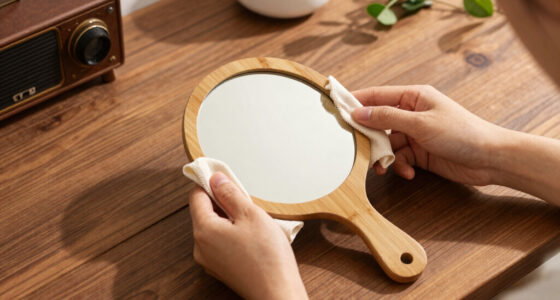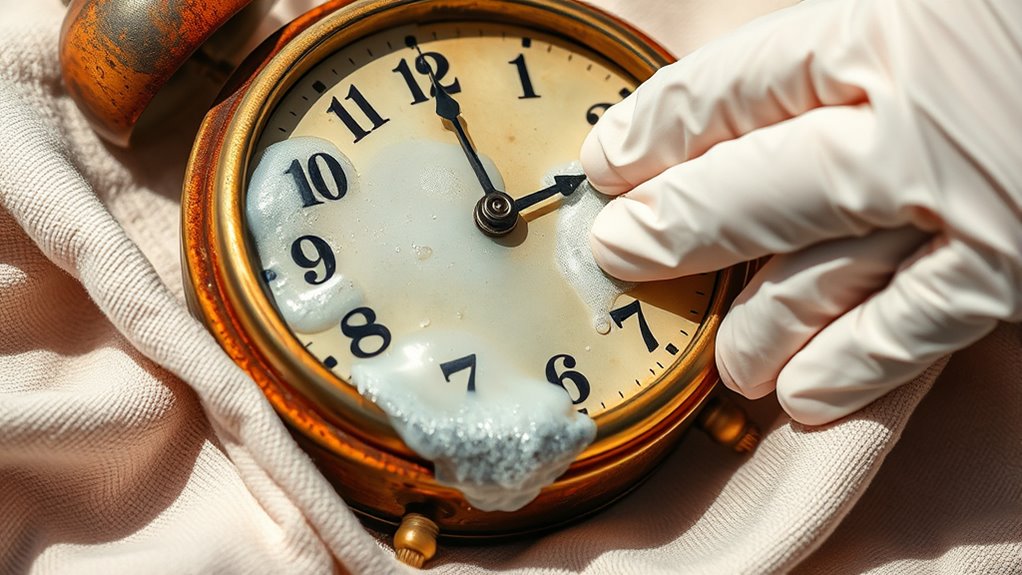

To safely remove rust, grime, and patina from vintage decor, start by gently cleaning surfaces with a soft cloth and mild solutions like diluted soap or baking soda paste. Avoid harsh abrasives or steel wool, which can scratch delicate finishes, and use soft brushes for rust spots. Patience is key—test cleaning methods on hidden areas first. For expert tips and detailed techniques, keep exploring to preserve your vintage pieces’ beauty and charm.
Key Takeaways
- Use soft cloths and mild solutions to gently clean surfaces, avoiding harsh abrasives or steel wool.
- For rust spots, apply a baking soda and water paste with a soft brush, and avoid wire brushes.
- Test cleaning methods on inconspicuous areas first to prevent discoloration or damage.
- Handle delicate fabrics carefully with vacuuming or gentle blotting, avoiding aggressive scrubbing.
- Regular, light cleaning helps preserve patina, prevent grime buildup, and maintain the vintage item’s integrity.
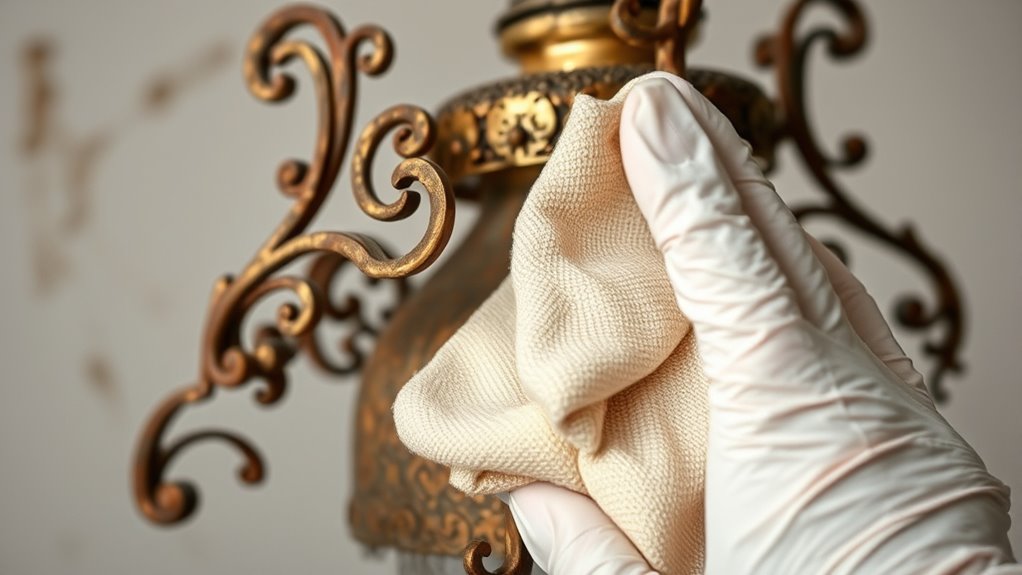
Have you ever wondered how to clean vintage decor without damaging its delicate features? Vintage pieces often hold a unique charm, but their fragile nature requires careful handling. When it comes to cleaning, understanding the materials involved is essential. For example, antique metal surfaces, like brass or wrought iron, can develop rust over time. Instead of harsh abrasives or strong chemicals, you want a gentle approach that preserves the patina and prevents further corrosion. Soft cloths and mild cleaning solutions are your best options. Dabbing lightly with a damp cloth and a bit of gentle soap can remove surface grime without stripping away the vintage character. For stubborn rust spots, a mixture of baking soda and water applied with a soft brush can work wonders. Avoid wire brushes or steel wool, as they can scratch or remove the delicate finish.
When your vintage decor features delicate fabrics, the key is to treat them with extra care. Dust can accumulate over time, so start by gently vacuuming with a soft brush attachment or using a lint roller. If the fabric is stained, avoid aggressive scrubbing, which can cause tears or fraying. Instead, use a mild fabric cleaner or a diluted solution of water and a few drops of gentle detergent. Test it on a small, inconspicuous area first to ensure it doesn’t cause damage or discoloration. Gently blot the stain rather than rubbing, and always work from the outside in to prevent spreading. For antique textiles or fragile curtains, consider professional cleaning to avoid accidental damage. Additionally, understanding water chemistry can help you select the safest cleaning methods and solutions for different materials, ensuring your vintage decor is preserved properly.
When cleaning vintage decor with mixed materials, take care to match your cleaning method to each component. For example, wooden parts should be dusted and occasionally polished with a suitable wax, while painted surfaces require a soft, damp cloth. Metal fixtures need to be treated separately to prevent rust, and fabrics must be handled delicately to avoid tears. Patience is key; don’t rush the process. Use a gentle touch, and always opt for the least invasive method first. Regular, light cleaning prevents buildup of grime and prolongs the life of your vintage pieces. Remember, preserving the integrity of your vintage decor is about balancing cleanliness with respect for its age and delicate features, ensuring it remains beautiful for years to come.

Retro Clean Cleaning Solution, 1 Pound (Pack of 1), 16 Ounce
Retro Clean-One Pound Bag
As an affiliate, we earn on qualifying purchases.
As an affiliate, we earn on qualifying purchases.
Frequently Asked Questions
Can I Use Commercial Rust Removers on Vintage Items?
You can use commercial rust removers on vintage items, but exercise caution. Check the chemical safety of the product and opt for gentler options to avoid damaging the patina or original finish. Always test in a small, hidden area first. Follow preservation techniques carefully, and consider consulting a professional if you’re unsure. Properly handling rust removal preserves your vintage decor’s value and character.
Is It Safe to Clean Delicate Patina With Water?
It’s not always safe to clean delicate patina with water, as water safety depends on the item’s material and condition. You might think water preserves cleanliness, but it can damage fragile surfaces or cause corrosion. To protect delicate preservation, use gentle, dry cleaning methods or specialized conservation products. Always test a small, hidden area first and consult a professional if you’re unsure—preserving the authenticity is worth the extra caution.
How Often Should Vintage Decor Be Cleaned?
You should clean your vintage decor based on its condition and environment, generally every 6 to 12 months. Regular maintenance routines help preserve its charm without causing damage. Keep an eye out for dust, grime, or tarnish, and clean gently when needed. Frequent cleaning isn’t necessary, but periodic attention guarantees your piece stays beautiful and well-preserved for years to come.
Are Natural Cleaning Methods Effective for Heavy Grime?
Natural cleaning methods can be effective for heavy grime when you use eco-friendly solutions and homemade remedies. For example, a paste of baking soda and water can lift dirt without harsh chemicals, and vinegar is great for breaking down grime on vintage surfaces. While these remedies work well for light to moderate dirt, for very stubborn grime, you might need to combine them with gentle scrubbing or seek specialized natural products.
Can Cleaning Damage the Value of Vintage Collectibles?
Yes, cleaning can damage the value of vintage collectibles if you’re not careful. Aggressive restoration techniques or harsh chemicals might erase original patina or details, diminishing authenticity. To protect your pieces, follow preservation methods that prioritize gentle cleaning and minimal intervention. Always consider consulting a professional before attempting restoration, as proper preservation techniques help maintain their historical charm and market value, ensuring your collectibles remain timeless treasures.

MRS. MEYER'S CLEAN DAY Baking Soda Cream Cleaner, Cuts Grease, Scratch-Free Polish, Lemon Verbena, 16 Fl Oz, Pack of 1
Mrs. Meyer’s Baking Soda Cream Cleaner removes soap scum and grease build-up to make your kitchen sparkle
As an affiliate, we earn on qualifying purchases.
As an affiliate, we earn on qualifying purchases.
Conclusion
Cleaning your vintage decor can preserve its charm for years to come. Did you know that properly cleaning and maintaining antique items can increase their value by up to 30%? By safely removing rust, grime, and patina, you not only protect your pieces but also enhance their beauty. Just remember to use gentle techniques and the right tools. With a little care, your vintage treasures will continue to delight and impress for generations.

MAXMAN Brass Brush, Soft Brass Bristle Wire Brush for Cleaning Metal Rust, Welds, Home and Kitchen, Wire Scratch Brushes with 10" Beechwood Handle
Premium Brass Bristles: Our brass wire brush features soft brass bristles, making it ideal for cleaning metal surfaces…
As an affiliate, we earn on qualifying purchases.
As an affiliate, we earn on qualifying purchases.
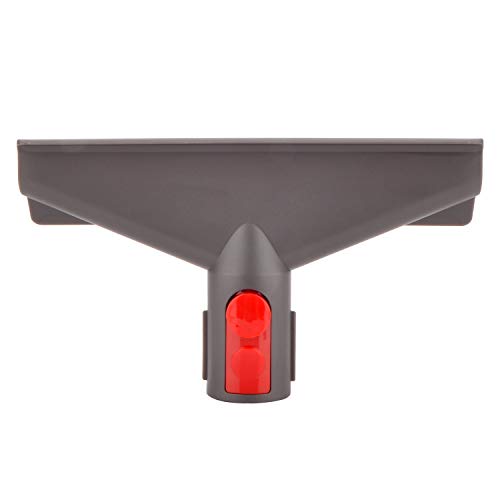
Fullclean Fabric & Mattress Tool Attachments Compatible with Dyson Gen 5 Gen5 V15 V15s V12 V11 V10 V9 V8 V7 Vacuum Cleaner Wide Nozzle Accessories Replacement Parts
Compatible with Dyson Cordless Stick and Handheld Vacuum Cleaners: Works with Dyson GEN5, V15, V15s, V12, V11, V10,…
As an affiliate, we earn on qualifying purchases.
As an affiliate, we earn on qualifying purchases.