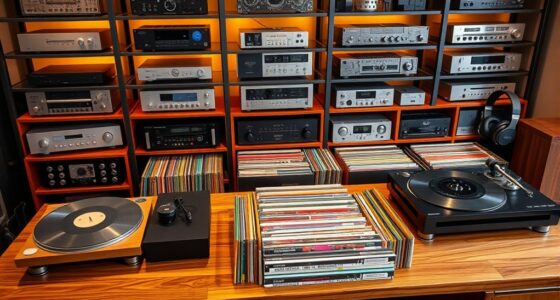
Understanding vinyl grading helps you assess a record’s true condition and value. Mint means the record looks and sounds like new, with no flaws or surface noise, while Near Mint has minor signs of handling but still plays perfectly. VG+ shows noticeable wear but remains enjoyable with minimal noise, and G indicates more visible scratches and possible surface noise or skips. Knowing these terms helps you make smarter purchases and better care for your collection—keep exploring for detailed insights.

Get furniture and decor delivered free — and shop member deals
- Fast, free delivery on millions of items
- Access to Prime Big Deal Days deals on October 6–7
- Prime Video, Amazon Music and more included
Key Takeaways
- Mint records are pristine, with no flaws and perfect sound, resembling new condition.
- Near Mint (NM or M-) indicates minimal signs of handling with no impact on playback quality.
- VG+ shows noticeable signs of use but generally plays well with only slight surface noise.
- G and G+ grades have significant wear, visible scratches, and may produce surface noise or skips.
- Proper cleaning and handling are essential for accurate grading and maintaining record value.
When you’re collecting or selling vinyl records, understanding how to grade their condition is essential for making informed decisions. The way you assess a record’s condition affects its value and helps set accurate expectations with buyers or sellers. One of the most important aspects of this process is knowing what each grading term really means, from Mint to G, so you can accurately describe the records in your collection. Proper record cleaning is a key step before grading, as dirt and dust can obscure the true condition of a record’s surface. Regularly cleaning your records helps reveal scratches or blemishes that might otherwise be hidden, giving you a clearer picture of their true state. Collector tips also suggest handling records carefully, avoiding unnecessary scratches, and using proper storage methods to keep them in the best possible condition for grading.
Starting with Mint, this grade indicates a record that looks and sounds like new, with no visible flaws or signs of wear. It should play perfectly, with no skips, pops, or surface noise. If you’re trying to sell a record graded Mint, ensure it’s been thoroughly cleaned and inspected under good lighting. Slight surface scuffs might still be acceptable if they don’t affect playback, but generally, a Mint record is pristine. Near Mint (NM or M-) is just a touch below Mint but still in excellent condition. It might have very minor signs of handling, such as light sleeve scuffs or slight storage marks, but these shouldn’t affect sound quality. Collector tips advise handling these records with care and storing them properly to maintain their high grade.
A Mint record is pristine, with no flaws and perfect playback.
Moving down, Very Good Plus (VG+) indicates a record with some noticeable signs of use but still plays well with minimal surface noise. You might see light scratches or scuffs, but they shouldn’t be deep or feel rough to the touch. Surface noise might be present during quieter passages, but it’s not overwhelming. Good (G) and Good Plus (G+) records show more significant wear. They might have visible scratches or marks, and you could notice more surface noise or even occasional skips. These are usually suitable for casual listening rather than for collectors seeking pristine sound quality.
Understanding these grades allows you to be honest and precise about a record’s condition, which builds trust with buyers and ensures you’re valuing your collection correctly. Always remember that proper record cleaning before grading can make a difference, revealing flaws you might otherwise miss. Additionally, standardized grading helps maintain consistency across the vinyl community, making transactions more transparent and fair. By following these collector tips and grading accurately, you’ll be better equipped to buy, sell, and appreciate vinyl records at their true condition and value.
Frequently Asked Questions
How Does Vinyl Grading Impact the Resale Value?
Vinyl grading directly impacts your resale value by influencing buyer confidence. Accurate grading guarantees collectors trust the condition, making your record more appealing and worth more. If your grading aligns with collector preferences, you’ll fetch a better price. Conversely, inaccuracies can lead to undervaluation or disputes. So, mastering precise grading boosts your chances of a successful sale, satisfying buyers and maximizing your vinyl’s worth.
Can a Vinyl’s Appearance Differ From Its Grade?
Did you know over 30% of vinyl collectors say appearance can differ from its grade? You should know that visual inspection differences can lead to grading inaccuracies, making it essential to trust expert assessments. A vinyl’s condition might look better or worse than its grade suggests, impacting value and enjoyment. Always consider both visual cues and grading accuracy importance when evaluating your records to make informed buying decisions.
Are There Regional Grading Standards for Vinyl Records?
Regional grading variations do exist, and they can influence how collectors assess vinyl records. You might find that standards differ slightly depending on local collector preferences or market norms. This means a record considered VG+ in one region could be graded differently elsewhere. To avoid surprises, always check the grading context and communicate with sellers or fellow collectors about regional standards, ensuring your expectations match the local practices.
How Should I Store Graded Vinyl to Maintain Quality?
To maintain your graded vinyl’s quality, you should store it upright in a cool, dry place away from direct sunlight, avoiding stacking to prevent warping. Using proper storage, like anti-static sleeves and sturdy inner and outer sleeves, protects the surface. Regular cleaning techniques, such as gentle wiping with a microfiber cloth, help keep your records pristine. This approach guarantees your vinyl stays in excellent condition, preserving its sound quality and value over time.
Is There a Universal Grading System for All Record Types?
There isn’t a universal grading system for all record types because grading consistency varies, and collector preferences differ widely. You should rely on established guidelines like the Goldmine Standard, but always consider individual collectors’ standards. When buying or selling, clarify grading terms and examine records thoroughly. This approach guarantees you meet expectations and maintain quality, even if specific grading scales differ across record types.
Conclusion
Now that you know what mint, VG+, and G really mean, you’re ready to navigate the vinyl world with confidence. Think of it like bargaining at a bustling market—knowing the grades helps you score the best deal without getting duped. Remember, don’t be a Scrooge—value isn’t just about shiny labels but the music it holds. With this guide, you’re all set to unearth hidden gems and avoid a Dickensian disappointment. Happy collecting!
Fall Picks
fall essentials
As an affiliate, we earn on qualifying purchases.